

 ChatGPT
AI Mode
ChatGPT
AI Mode
 Claude
Perplexity
Grok
Claude
Perplexity
Grok
Last Updated on February 21, 2026 by Hailey

Table of Contents
Link exchange is controversial among SEOs, but here’s what the data shows. Ahrefs studied 140,000 domains and found that 73.6% of well-performing websites use reciprocal links strategically.
Even more interesting, 43.7% of top-ranking pages include link exchanges in their backlink profiles.
When done correctly, link exchanges can pass link juice, helping improve search engine optimization and search engine rankings.
This guide shows you how to do link exchanges safely. You’ll learn which methods work best, how to vet partners using domain authority metrics, and the best practices that comply with Google’s latest algorithm updates to avoid penalties.
Backlinks are essential for improving search engine rankings and authority.
What Is Link Exchange?
A link exchange (also called reciprocal linking) is simple: two websites agree to place links to each other’s content.
Here’s how it works:
Site A publishes a link pointing to Site B’s content. Site B returns the favor by adding a link back to Site A within their related content.
Reciprocal link building and exchanging backlinks often occur naturally between websites in the same niche, especially when they share relevant links and valuable content.
The goal? Boost your authority signals to search engines and drive referral traffic from readers who click through.
Link exchanges are just one component of a broader link building strategy. While reciprocal linking focuses on mutual benefit between two sites, effective link building encompasses multiple tactics including guest posting, content marketing, and digital PR.
Are Link Exchanges Safe?

Yes, link exchanges are safe when you do them right. Just the key is to keep them under 10% of your total backlink profile and only partner with relevant, quality sites. Avoid engaging with spammy sites, as links from such sources can harm your rankings and violate Google’s spam policies.
Google does penalize “excessive link exchanges.” Those coordinated schemes with dozens of low-quality reciprocal links get hit hard.
But natural reciprocal relationships between genuinely related sites? Those carry minimal penalty risk.
According to Google’s Webmaster Guidelines, it’s important to distinguish between natural reciprocal links and manipulative link schemes. Following a legitimate SEO strategy that prioritizes relevance and quality helps you stay compliant and avoid penalties.
Here’s proof:
Ahrefs themselves maintain a 19% reciprocal link ratio while ranking competitively across thousands of SEO keywords. Google introduced pattern detection algorithms in their 2024 Link Spam Update.
So what’s the difference between safe and risky? It’s all about editorial justification. Does your link help readers? Or does it exist just for ranking manipulation?
When you use editorial standards and natural placement, link exchanges can accelerate your authority growth. But if you go overboard with excessive or low-quality reciprocal linking, Google will hit you with penalties. You could drop 20-60 positions or face complete index removal.
Diversification of link-building strategies is key to mitigating risks associated with link exchanges.
⚠️ Warning: Google’s 10% Rule
Keep reciprocal links under 10% of your total backlink profile. Ahrefs maintains 19% and ranks well, but they’re an exception with massive authority. For most sites, exceeding 15% triggers algorithmic scrutiny. Exceeding 30% almost guarantees manual review.
Do Major Brands Use Link Exchanges?
Absolutely. SEO researcher Glenn Allsopp documented “private influencer networks” where major publishers like Cosmopolitan, Marie Claire, and leading tech publications regularly exchange links to grow together.
Here’s what this means: websites with millions of monthly visitors participate in strategic link exchanges. The difference isn’t whether they do it. It’s how they do it. Execution quality and editorial standards matter more than the practice itself.
Building relationships with other site owners is a key strategy for major brands, as it leads to more organic link opportunities and guest posting invitations.
These networks prove that reciprocal linking is legitimate when partners share genuine topical relevance and maintain high content quality standards.
Types of Link Exchanges
Direct Reciprocal Linking
Website A links to Website B, and Website B links back to Website A. This is also known as a direct link exchange.
Google’s stance is clear: direct link exchanges intended to manipulate search rankings are against its guidelines. Engaging in such reciprocal linking can be easily detected by Google and may result in penalties or a loss of SEO value.
Three-Way (ABC) Link Exchanges
This method spreads the reciprocal relationship across three sites to break the direct pattern. Website A links to Website B, Website B links to Website C, and Website C links back to Website A.
ABC link exchanges can effectively pass link equity and link juice between sites, helping to transfer SEO value and improve search rankings.
You’ll need to own or coordinate multiple domains, but this creates less obvious footprints in Google’s link graph analysis. The safest way to engage in ABC link exchanges is through guest posting, which allows for more organic link building.
Guest Post Swaps
This approach combines content creation with link exchange by utilizing guest posts. In a guest post swap, you and a partner each create unique, informative articles that provide valuable and high quality content for each other’s audiences, including a contextual link back to your content.
This method is considered the safest way to engage in link exchanges, as it allows for more natural link placements and enhances the credibility of your link-building efforts.
This approach adds editorial value through unique, high quality content, making your reciprocal arrangement more defensible under Google’s quality guidelines.
✅ Which Method to Choose?
- Beginners: Start with guest post swaps (safest, adds valuable and high quality content)
- Intermediate: Use direct reciprocal linking with < 10% ratio
- Advanced: Implement three-way ABC exchanges across owned properties
Never mix all three methods on the same site simultaneously. Pick one strategy and execute it well.
Benefits and Risks of Link Exchange
Link exchanges get you backlinks faster than passive link earning. You’re looking at 2-4 hours per exchange.
But here’s the risk: excessive reciprocal linking or cross linking, especially when done with spammy sites or as part of buying links, violates Google’s link scheme policies.
Exchanging links with low-quality or spammy sites, or using partner pages exclusively for link exchanges, can trigger severe penalties, including a drop of 20-60 positions or complete index removal if they catch you.
Note: Link exchanges should not be transactional; the more they feel like a transaction, the riskier they become.
Key Benefits:
✅ You build authority faster – Getting 10-15 relevant backlinks through exchanges takes 2-3 weeks. Link exchanges can provide significant SEO benefits and help boost SEO. Organic link earning? That’s 2-3 months.
✅ You get predictable placements – Confirmed links beat hoping for natural mentions.
✅ You drive referral traffic – Contextual links from relevant sites can increase organic search traffic and improve visibility in search results by bringing qualified visitors who actually convert.
✅ You invest less time – Exchanges take way less time than unilateral outreach campaigns.
When done correctly, link exchanges allow participants to build links and earn free or affordable backlinks.
Critical Risks:
❌ Your links lose value – When your reciprocal ratios exceed 30%, links get algorithmically devalued without any warning. Excessive reciprocal linking can be seen as an attempt to manipulate search rankings, which is against Google’s guidelines.
❌ You get manual penalties – Search Console warnings for “unnatural links” mean you’ll need to disavow links and file reconsideration requests. Failing to follow a legitimate SEO strategy, such as relying on manipulative link exchanges, can result in penalties or ranking demotion.
Google’s Link Spam Update uses real-time machine learning to evaluate backlink profiles for reciprocal patterns. The enforcement has gotten way more aggressive.
Here’s another risk: poor partner selection. When you exchange links with low-quality, spammy sites, or penalized sites, you damage your link profile even if your reciprocal ratio stays low. Automated or unrelated link exchanges with spammy sites are considered link schemes and can harm your search rankings.
How Do I Find Quality Link Exchange Partners?
Use Ahrefs Content Explorer to find websites in your niche and identify potential link partners. Look for sites with Domain Rating above 30 and organic traffic exceeding 5,000 monthly visits. Finding websites and potential link partners within your niche increases the chances of building valuable and relevant connections.
Then vet your candidates by evaluating other websites for content quality, contextually relevant topics, and opportunities for niche link exchanges.
Ensure their content is topically aligned with your own and check for link scheme footprints like excessive reciprocal patterns. Approaching link exchanges strategically and ethically is essential for long-term SEO success.
Modern link exchange programs must prioritize editorial value and niche relevance to avoid triggering AI-powered spam detection.
Partner Discovery Methods:
✅ Competitor backlink analysis – Export your top-ranking competitors’ backlink profiles using Ahrefs Site Explorer. Identify sites linking to multiple competitors. Link builders often analyze how sites link to each other to uncover link exchange opportunities and spot relevant, high-quality prospects.
✅ Content gap research – Find sites covering complementary topics within your niche using topical searches.
✅ Industry communities – Join niche-specific Facebook groups, Slack channels, and forums where website owners discuss collaboration. Many private groups and networks offer link exchange opportunities, promoting mutual linking of high-quality content and discouraging exploitative practices. Check out popular link building Slack communities where SEO professionals share partnership opportunities.
✅ HARO requests – Monitor Help a Reporter Out queries to connect with publishers who need expert sources.
Quick Partner Check
Answer YES to all 4 questions before you proceed with a link exchange:
☐ Domain Rating above 30? (Check using Ahrefs Site Explorer)
☐ 5,000+ monthly organic visitors? (Make sure their traffic trends show growth)
☐ Audience relevance to your niche? (Same or adjacent industry)
☐ Clear topical connection between linked content? (Natural editorial fit)
🎯 Quick Answer: Minimum Partner Requirements
Don’t waste time vetting sites that don’t meet these baseline thresholds:
- ✓ Domain Rating: 30+
- ✓ Monthly traffic: 5,000+ organic visitors
- ✓ Site age: 2+ years
If they fail any of these, move on immediately.
Partner Vetting Scorecard
Evaluate every potential partner using these weighted criteria before you propose an exchange:
| Criterion | Weight | Pass Threshold | Red Flag |
| Domain Rating (Ahrefs) | 25% | DR 30+ | DR below 20 |
| Organic Traffic | 20% | 5,000+ monthly visits | Declining 6-month trend |
| Content Quality | 25% | Original research, proper grammar, cited sources | Thin content, spinning, AI-generated without editing |
| Topical Relevance | 20% | Same or adjacent niche | Unrelated industry |
| Link Profile Health | 10% | <15% reciprocal ratio, diverse anchors | 30%+ reciprocal links, spammy referring domains |
Critical Red Flags to Avoid
Reject partnerships immediately if you spot these warning signs:
❌ Dedicated link pages – Standalone “Partners” or “Resources” pages with no editorial context scream manipulation. Using partner pages exclusively for link exchanges is a violation of Google’s guidelines.
❌ Direct competitors – Linking to sites targeting identical keywords hurts your competitive advantage.
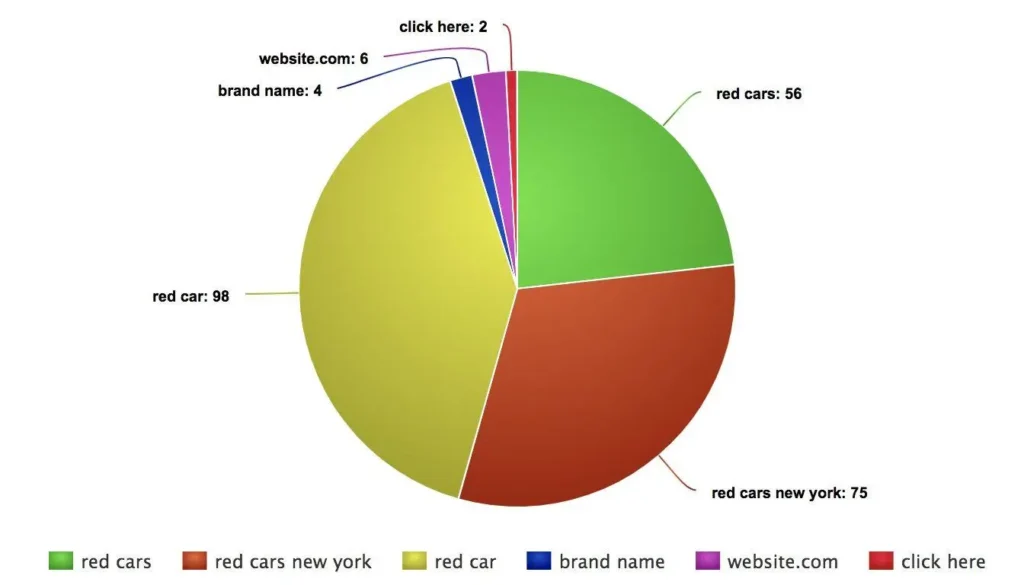
❌ Unnatural anchor text – Backlink profiles dominated by exact-match commercial anchors show over-optimization.
❌ Outbound link ratio exceeding 2:1 – Sites with 200+ outbound links for every 100 inbound links show link scheme patterns.
❌ Excessive cross linking – Repeated reciprocal or mutual links between unrelated sites, especially when not editorially relevant, can be seen as manipulative and violate Google’s spam policies.
❌ Site age under 2 years – New domains lack trust signals and carry higher penalty risk.
❌ Majestic Trust Flow below 10 – Low trust scores mean poor link quality or spam history. Be cautious of spammy sites, as links from these can harm your rankings.
How to Do Link Exchange Safely?
Send personalized outreach emails that propose specific mutual values. When negotiating, ensure that exchanged links are contextually relevant and come from relevant links within your industry or niche.
Aim for natural contextual placement within body paragraphs, not dedicated link sections, to maximize SEO benefits.
Be cautious to avoid link exchanges with spammy sites, as participating in link schemes or acquiring links from low-quality, unrelated sources can violate Google’s spam policies and harm your search rankings.
Keep your reciprocal links under 10% of your total backlink profile. Diversify your anchor text. And audit your backlink profile quarterly using Google Search Console.

Link Exchange Outreach Process Steps
#️⃣ 1: Research the target – Read 2-3 recent articles to understand their content style. Identify a specific article where your link would fit naturally. Make sure to identify target keywords and valuable content that align with your outreach, as this increases the chances of a successful link exchange.
#️⃣ 2: Craft personalized pitch – Reference specific content from their site. Explain why your resource complements their article and propose the exact placement.
#️⃣ 3: Propose mutual value – Tell them which of their resources you’d link to and where that link would appear on your site. Emphasize the importance of building relationships with other site owners for long-term link-building success.
#️⃣ 4: Negotiate placement details – Discuss anchor text options (prefer branded or natural phrases over exact-match keywords) and link location within the article body.
#️⃣ 5: Execute and verify – Place your link first to show good faith. Then verify your partner’s placement using Ahrefs Site Explorer or Google Search Console within 2-3 weeks.
Email Outreach Templates
Here are three proven templates you can customize for your link exchange outreach:
Template 1: Cold Outreach (First Contact)
📧 Link Outreach Email Template
Subject: Quick idea for [Their Site Name]
Hi [Name],
I just read your article on [specific topic] and noticed you mentioned [specific point]. Really useful perspective, especially the part about [detail from article].
I run [Your Site Name] where we cover [your niche]. I recently published a guide on [related topic] that expands on some of the points you made: [Your URL]
I’m thinking it could add value for your readers in the [section name] section of your article. Would you be open to adding a mention?
Happy to link back to your [specific article] from our upcoming piece on [related topic]. It’d be a natural fit in our [section name] section.
Let me know if this works!
Best,
[Your Name]
Template 2: Follow-Up Email
📧 Link Exchange Follow Up Email Template
Subject: Re: Quick idea for [Their Site Name]
Hi [Name],
Just circling back on my email from last week about linking to each other’s content.
I’ve already added a link to your [article title] in our guide here: [Your URL with their link]
Take a look and let me know if you’d be open to reciprocating with a link to our [article title] in your [section name] section.
Looking forward to hearing from you!
[Your Name]
Template 3: Warm Introduction (Mutual Connection)
📧 Guest Post Collaboration Email Template
Subject: [Mutual Contact] suggested we connect
Hi [Name],
[Mutual Contact] mentioned you might be interested in a content collaboration. I have been following [Their Site Name] for a while, and your piece on [topic] was spot on.
I am working on a similar angle at [Your Site Name] with our guide on [topic]: [Your URL]
Would you be open to exchanging links? Here is what I am thinking:
You link to our guide in your [article title]
We link to your [article title] in our upcoming post on [topic]
Both audiences would benefit since the content covers related angles.
Let me know your thoughts.
[Your Name]
Safety Best Practices
✅ Keep ratio limits – Your reciprocal links should stay below 10% of your total backlink count. So if you have 500 total backlinks, maintain fewer than 50 reciprocal relationships. Diversifying your link-building strategy is crucial to avoid patterns that could be flagged by search engines.
✅ Diversify your anchor text – Use branded anchors for 40% of exchanges, naked URLs for 30%, natural phrases for 20%, and exact-match keywords for only 10%. This distribution looks natural in link audits.
✅ Use contextual placement – Place your links within body paragraphs near relevant content. Never use dedicated “Partners” sections or site-wide footers. Contextual links from relevant sites can help increase organic search traffic by improving your visibility in Google’s organic search results. Your links should feel like editorial recommendations, not advertisements.
✅ Vary your timing – Stagger link placements over weeks or months. Don’t execute 10 exchanges all at once. Sudden reciprocal link spikes trigger algorithmic scrutiny.
✅ Prioritize quality over quantity – Five high-authority backlinks from topically relevant exchanges beat twenty mediocre partnerships. Domain Rating 60+ links from relevant sites give you more ranking power than DR 30 links. Always avoid spammy sites, as exchanging links with them can violate Google’s spam policies and harm your search rankings.
💡 Pro Tip: The “Link First” Strategy
Always place your link to their site BEFORE asking for reciprocation. Include the live URL in your first email. This shows:
- ✓ Good faith and commitment
- ✓ You’re not just collecting links
- ✓ Immediate value for their site
Conversion rates jump from 15% to 35% using this approach.
Ongoing Monitoring
➡️ Run quarterly backlink audits – Export your backlink profile from Google Search Console every three months and calculate your reciprocal link ratio. If you’re over 10%, pause new exchanges until natural links rebalance your profile. Consider using link building software to automate tracking and monitoring of your backlinks.
➡️ Check your partner sites – Verify partner links stay live using Ahrefs Site Explorer monthly. Also, review your partners to ensure you are not exchanging links with spammy sites, as this can violate Google’s spam policies and harm your rankings. Contact partners right away if links disappear.
Get Safe Link Exchanges + Professional Backlinks 🚀
The key to sustainable rankings? Combine strategic link exchanges (under 10% ratio) with high-quality content that earns natural links, plus professional backlinks to accelerate growth.
Ready to scale safely without risky patterns?
Skip manual outreach hassles. BuildingBacklinks.io delivers vetted link exchange partners + white-hat backlinks (niche edits, guest posts, custom campaigns).
Frequently Asked Questions
1) Are Link Exchanges Still Effective in 2025?
Yes. Well-performing websites have reciprocal links, and top-ranking pages use link exchanges strategically when they account for less than 10% of total backlinks.
2) Can Google Detect Link Exchanges?
Yes. Google detects link exchanges through algorithmic pattern analysis and runs manual reviews when reciprocal patterns exceed 30% of your total backlinks. Natural reciprocal links between genuinely related sites with editorial justification remain acceptable.
3) Are Link Exchanges Against Google’s Guidelines?
Google classifies “excessive link exchanges” as link scheme violations. Isolated reciprocal links between genuinely related sites with editorial justification are acceptable.
4) How Long Does It Take for Link Exchanges to Impact Rankings?
Link exchanges show ranking impact within 4-6 weeks for established sites, 3-6 months for new websites, and 2-3 days for authoritative domains.