
 ChatGPT
AI Mode
ChatGPT
AI Mode
 Claude
Perplexity
Grok
Claude
Perplexity
Grok
Last Updated on April 18, 2026 by Henry

Table of Contents
$47 per click. That’s what you’re paying, on average, just to get a single visitor in the legal space as per WordStream. Now imagine relying on that every single day.
This is why the firms that win in the long term are not the ones spending more; they are the ones ranking higher. And that shift almost always comes down to one thing: backlinks that actually carry authority.
The right mention from a credible source can push your pages above platforms like Avvo and Justia, without locking you into endless ad spend.
But here’s where it gets tricky. Link building for lawyers is not just about SEO. It’s about staying compliant. What works in other niches can easily cross the line under ABA and state bar rules.
That’s exactly what this guide is built for. Every strategy here focuses on earned links, built the right way, so you can grow visibility, build trust, and stay fully compliant while doing it.
Why Link Building Matters for Law Firms
In legal SEO, ranking is not just about being relevant; it is about being trusted. And Google does not take chances here. Law firm pages fall under YMYL, which means they are judged far more strictly than most other industries.
This is where backlinks quietly do the heavy lifting. Not just any links, but the ones that come from sources people already trust. When your firm is mentioned or cited in editorially reviewed content, it sends a strong signal that your expertise is real, not self-claimed.
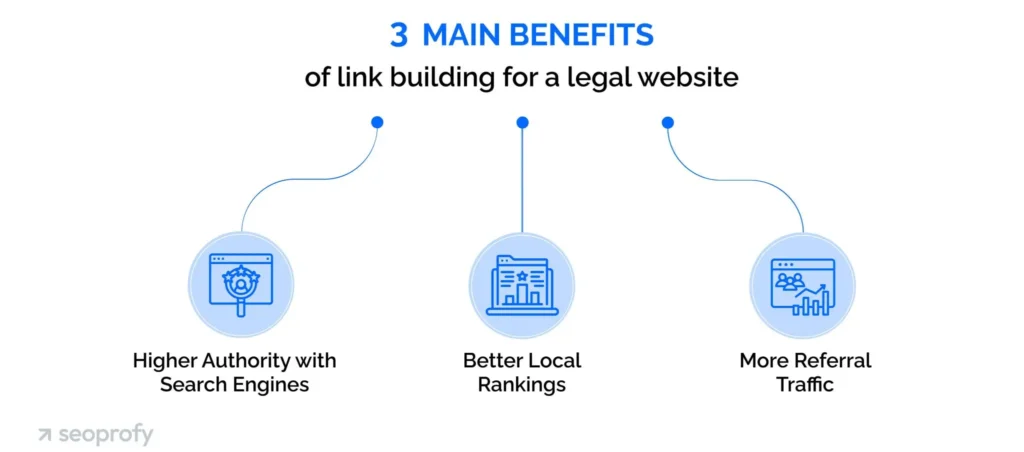
Under Google’s E E A T framework, that kind of validation matters. It tells search engines that your content is credible, your advice is reliable, and your firm deserves visibility.
In a space where trust decides who ranks and who gets ignored, the right backlinks are not just helpful, they are what move you into the conversation.
📘 What Is E-E-A-T?
E-E-A-T stands for Experience, Expertise, Authoritativeness, and Trustworthiness. These are the signals Google uses to determine whether your content is credible enough to rank.
For law firms, this matters even more. Legal content falls under YMYL (Your Money or Your Life), meaning it is held to a much higher standard than most other industries. It is not just about writing well, it is about proving you can be trusted.
That is where backlinks come in. Mentions from sources like state bar directories, legal publications, and educational sites help build these signals faster. They act as external proof that your firm is experienced, reliable, and worth showing to potential clients.
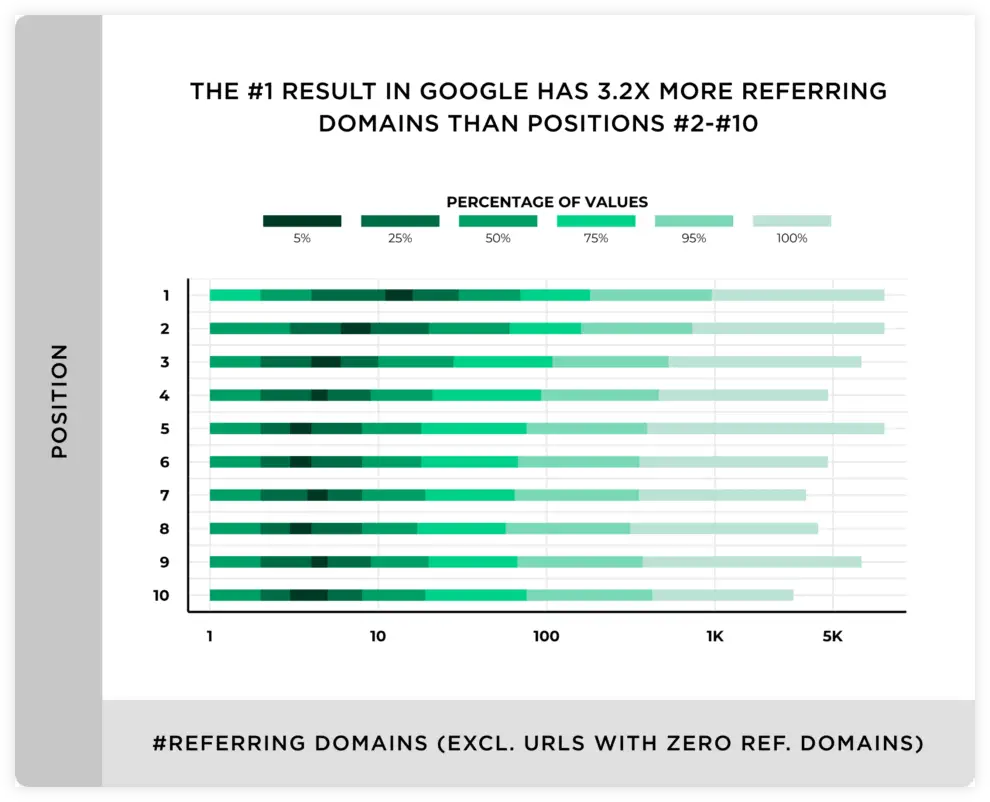
BrightLocal’s study highlights something most law firms overlook. The quality of referring domains is one of the top signals for ranking in the local map pack. You can have strong on-page SEO, but if your link profile is thin, directories like Avvo, Justia, and Martindale will still outrank you.
This is why tracking backlinks the right way matters. Instead of focusing on total links, pay attention to unique referring domains. What counts is how many different, credible sites are linking to you, not how many times the same site does.
Make it a habit to review this monthly.
A steady increase in quality referring domains is often the clearest sign that your authority is actually growing.
🔗 What Are Referring Domains?
A referring domain is simply a unique website that links to you, counted once. Even if one site links to you 50 times, it still counts as a single referring domain.
What actually matters is diversity. Ten links from ten different, credible sites will always carry more weight than fifty links from the same source. For law firms, this means earning links from a mix of sources like state bar sites, local news, and legal publications.
To stay on track, monitor your referring domains each month using tools like Ahrefs Webmaster Tools or Google Search Console.
Bar Ethics and Compliance Baseline
Before any link helps your rankings, it has to pass one test first. Compliance. In legal SEO, that line is not flexible.
Every link building effort must align with ABA Model Rule 7.1, which strictly prohibits false or misleading claims about legal services. That means no exaggeration, no vague promises, and no tactics that could be seen as misrepresenting your firm.
In simple terms, if a link would not hold up under professional scrutiny, it is not worth having. The firms that grow safely are the ones that treat compliance as part of the strategy, not a limitation.
⚖️ What Is ABA Model Rule 7.1?
In legal SEO, there is a clear line you cannot afford to cross. ABA Model Rule 7.1 prohibits any false or misleading communication about legal services.
This means paid links presented as genuine editorial mentions are a direct violation. What works in other industries can quickly become a compliance issue here.
States like California, New York, and Florida apply even stricter rules, so always review your state bar guidelines before starting outreach.
Paying for a “guest post” that looks like real editorial content can backfire fast. It breaks ABA Model Rule 7.1 and also violates Google’s link spam policy, which means one shortcut creates two problems at once.
A simple way to stay safe is to keep a record of every link you earn, including the source, how it was acquired, and the date.
You can also use the ABA’s free ethics resources to review rules across states and make sure your strategy stays fully compliant.
Audit and Baseline: Referring Domains and Link Equity
Before you build anything, you need to see what you’re actually working with. Most law firm sites don’t lack links; they lack the right ones.
Start with an audit in Ahrefs Webmaster Tools. Export your referring domains and clean the list with intent:
- Remove domains below DR 10
- Flag irrelevant foreign language sites
- Eliminate links from obvious spam or penalized networks
📊 What Is Domain Rating (DR)?
Domain Rating (DR) is Ahrefs’ way of scoring website authority on a scale from 0 to 100. Higher scores generally indicate stronger trust — but only when the site is relevant.
- DR 10 and below adds noise
- DR 50+ from legal, .edu, or bar sites actually moves rankings
- Always check real traffic — a high DR with no audience is a red flag
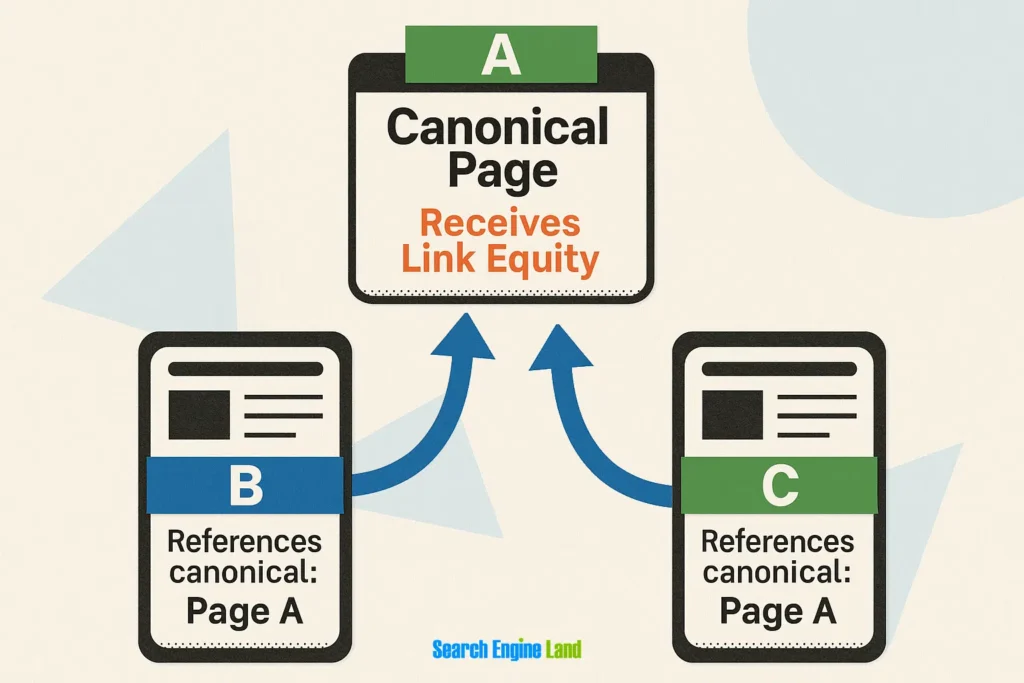
Most firms make one mistake. They stack authority on the homepage, while money pages sit untouched. A smarter move is distributing link equity where conversions happen.
Linkable Content for Law Firms
No content, no links. It’s that simple. But not all content earns attention.
What works consistently:
- Long form guides that simplify legal processes
- City specific resource pages that signal local relevance
- Original data studies that journalists can cite
- The more useful your content is, the less you have to “ask” for links.
Law Firm Scholarship Links
A small scholarship can quietly become one of your strongest assets.
Offer $500 to $1000, publish a dedicated page, and submit it to universities.
One .edu link from a trusted institution can outweigh dozens of average links, and it comes with zero compliance risk.
Outreach and Building Links for Law Firms
Outreach is not about sending more emails. It’s about sending better ones. For a family law firm in a mid-size city, that means local parenting blogs, community legal aid pages, regional news outlets, and finance blogs that cover divorce and asset division.
Start with the right targets:
- Local blogs and news sites
- Legal aid and community pages
- Niche sites related to your practice area
Make your outreach count:
- Reference the exact page you’re targeting
- Explain clearly why your resource adds value
- Keep it specific, not generic
Guest posting still works when it’s original, credible, and written by real attorneys.
Avoid paid placements. They break both Google rules and bar regulations. Some of these ongoing relationships naturally open the door to reciprocal linking opportunities; keep these under 20% of your total referring-domain profile to stay within Google’s safe zone
Anchor Text Discipline
Anchor text is where many law firms slip up.
Keep your profile natural:
- Branded anchors
- Plain URLs
- Generic phrases
- Limited partial keywords
Exact match anchors should stay under 5%. Anything more starts looking forced.
Local SEO Link Building
Local links carry signals national directories cannot replicate.
Focus on:
- Local news sites
- Chamber of commerce pages
- Community organizations
Also claim every relevant local listing. These are free, trusted, and directly tied to your local authority.
Consistency in your business details across platforms matters more than most realize.
📍 What Is a Local Citation?
A local citation is any online mention of your firm’s name, address, and phone number (NAP) — with or without a link. Directories, chamber pages, and local news mentions all count.
Consistent NAP across every citation is critical. A mismatch between your Google Business Profile and your bar directory listing can weaken your local pack rankings.
To stay on track, audit your citations quarterly using tools like BrightLocal or Whitespark.
- Google Business Profile
- State bar directory
- Local chamber of commerce
Digital PR and Expert Commentary
Digital PR means getting journalists to quote you as an expert source and earning an editorial link in the process.
A family law attorney commenting on local divorce trends, or a criminal defense attorney explaining a new sentencing reform, can land in local news outlets that carry strong domain authority and geographic relevance.
Qwoted and ProfNet are now the go-to platforms for journalist-source matching after HARO shut down in December 2024. Respond to legal-topic queries within the first hour of posting, that alone significantly improves your chance of being included in the story.
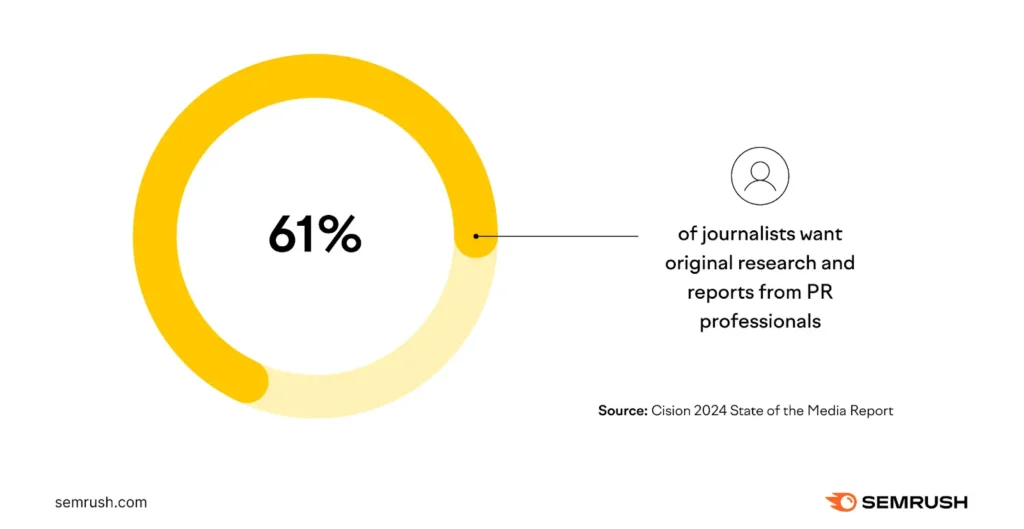
Pitching your own data directly produces higher-authority placements than waiting for queries. A survey of past clients or a study of local case outcomes gives a reporter a newsworthy hook and makes your firm the primary source rather than a quoted comment.
Bar Citations and Legal Directory Links
Your state bar’s member directory is one of the most valuable free links available to any licensed attorney. These listings are editorially verified, publicly tied to your bar admission, and directly relevant to legal E-E-A-T signals.
Check that your listing links to the right page on your site and that your name, address, and phone number match exactly what’s on your Google Business Profile.
Four general legal directories consistently appear in the referring-domain profiles of page-one law firm rankings. All four offer free basic listings, fill out every field, because profile completeness affects how each directory ranks you internally and what anchor text it uses when linking to your site.
| Directory | Cost | Best For | Profile Tip |
| Avvo | Free basic | Consumer-facing areas: PI, family, criminal | Complete peer endorsements — it boosts internal ranking |
| Justia | Free | All practice areas, strong SEO authority | Link to your practice-area page, not homepage |
| FindLaw | Free basic | High-traffic directory, strong DR | Fill every field — incomplete profiles rank lower internally |
| Martindale-Hubbell | Free basic | B2B and corporate law clients | Peer review rating adds direct E-E-A-T credibility |
Practice-area directories add topical precision. Listings in the National Academy of Elder Law Attorneys directory, the American Immigration Lawyers Association member listing, or the National Association of Criminal Defense Lawyers directory each link from a domain Google treats as highly relevant to that specific practice area.
Measuring Success
Track these three numbers every month:
- Unique referring domains gained – the primary growth metric; one new high-authority domain outweighs ten low-quality links
- Keyword ranking movement – monitor your two or three target practice-area queries weekly
- Lead source attribution – use UTM parameters on referral links and track contact-form submissions and calls back to organic and referral sources in your CRM
Most sites need three to six months before referring-domain growth moves competitive legal keywords. Local mid-size market terms respond faster; major metro personal injury terms need a twelve-month runway.
If domains are growing but rankings aren’t moving, audit your anchor text distribution before adding more links.
Maintenance: Broken Links and Unlinked Mentions
Run a broken-link check in Ahrefs Webmaster Tools every quarter, restore any deleted destination URLs, and set up 301 redirects where restoration isn’t possible.
Set Google Alerts for your firm name and lead attorneys when a publication mentions you without a link, a short, friendly email asking the author to add one converts a solid percentage of those mentions into new referring domains at zero prospecting cost.
🔄 What Is Link Reclamation?
Link reclamation is the process of turning existing unlinked brand mentions into live backlinks. A publication may already cite your firm — they just haven’t added a hyperlink.
One polite email to the author asking them to include the link can convert a meaningful percentage of these mentions — all at zero prospecting cost.
To stay consistent, set up Google Alerts for your firm name and lead attorneys so you can catch every mention as it happens.
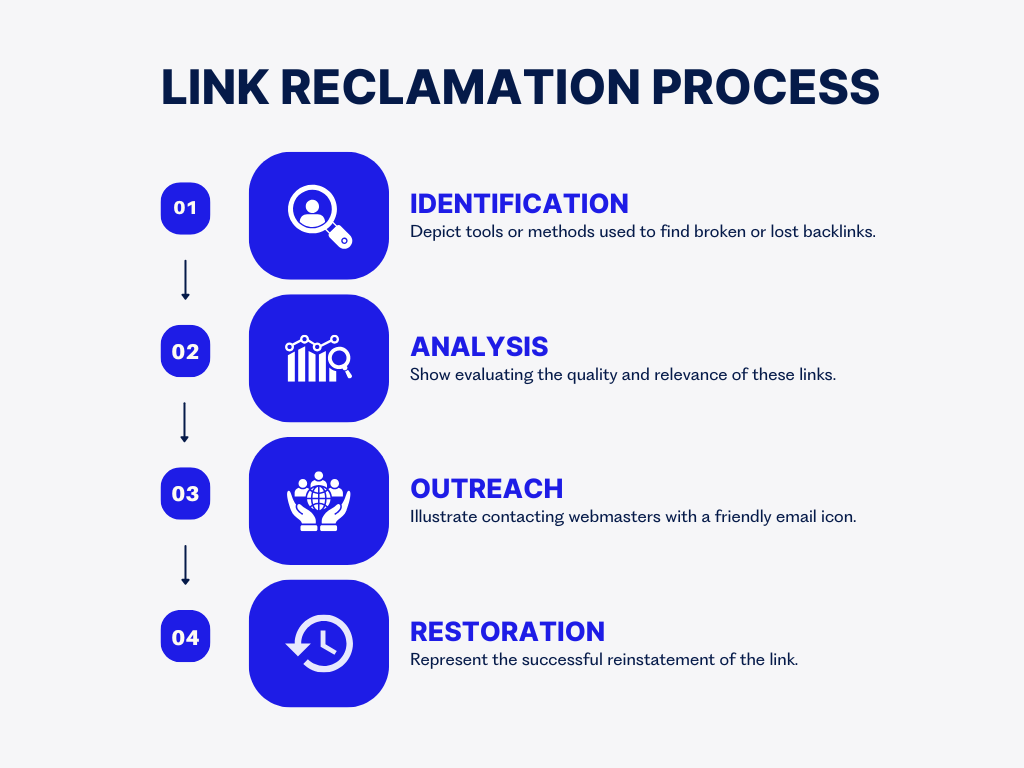
Tools: Google Alerts (free), Ahrefs Content Explorer, Brand24
Disavow only after attempted manual removal fails and only with clear evidence of harm. Google’s John Mueller confirmed in 2024 that most low-quality links are simply ignored rather than penalized.
Get Professional Backlinks for Your Law Firm 🚀
Building authority in legal SERPs takes time, and consistent link acquisition from bar-compliant sources is what separates page-one firms from everyone else.
If you’d rather skip the outreach grind and work with a team that understands both SEO and the compliance guardrails attorneys operate under, check out BuildingBacklinks.io.
Choose from niche edit packages, guest post packages, or custom campaigns built around your practice area and local market goals.
Frequently Asked Questions
1) Should I Hire a Link-Building Agency or Do It In-House?
Solo lawyers can manage basics like directories and outreach with a few hours each month. Agencies make more sense for larger or multi-location firms handling multiple campaigns. Always compare cost per new referring domain before deciding.
2) How Long Does Law Firm Link Building Take To Show Results?
Most firms see movement in 3 to 6 months as referring domains grow. Less competitive local markets respond faster, while major metro keywords can take up to a year. Consistency is what drives results.
3) What Link-Building Tactics Are Safe Under The Bar Advertising Rules?
Earned editorial links, legal directories, and expert commentary are safe when transparent and properly attributed. Paid links disguised as editorial content are not allowed. Keep records of how every link is acquired.
4) Which Free Tools Support Law Firm Link Building 0n a DIY Budget?
Google Search Console and Ahrefs Webmaster Tools help track backlinks and gaps. Platforms like Qwoted and ProfNet support media outreach, while tools like Check My Links help find broken link opportunities.