Last Updated on February 19, 2026 by Shubam

Table of Contents
Building backlinks can be a slow process.
You need to pitch guest posts, create content, build relationships, and it can take weeks just to secure one link.
PBN backlinks seem like an easy shortcut. Buy a link, choose your anchor text, and watch your rankings improve. Many people are tempted to build or buy PBN links as quick black-hat methods for fast ranking gains. No outreach required.
However, if Google detects these links, it can issue a manual action that erases months of SEO efforts overnight.
BuildingBacklinks specializes in white-hat link strategies. This guide explains what PBN backlinks are, why Google disapproves of them, twelve warning signs that indicate PBN links in your backlink profile, real penalty stories with traffic data, and better alternatives that won’t risk your site.
Should You Use PBN Backlinks?
No. PBN backlinks violate Google’s spam policies and can trigger penalties that eliminate 60-70% of your traffic. Sure, some carefully-built networks work for a while.
But you’re constantly gambling with your rankings. One algorithm update and you’re done. White-hat alternatives take longer but won’t blow up your site.
⚠️ WARNING
Using PBN backlinks violates Google’s Webmaster Guidelines and can result in:
- 60-70% traffic loss within weeks
- Manual action penalties or complete deindexing
- $20,000-$30,000 investment lost overnight
- 6 months to 2 years recovery time
- Makes your website nearly impossible to sell
The risk far outweighs any temporary ranking gains.
What Are Private Blog Network (PBN) Backlinks?
A PBN (private blog network) is a group of websites that one person or company owns just to create fake backlinks. A PBN network is built to generate PBN backlinks by controlling multiple sites. These aren’t real websites with real readers. They exist only to manipulate search rankings by passing authority to a target site.
Here is how PBN operators build these networks: they purchase expired domains that already have strong backlinks, add some basic content to make the sites appear legitimate, and then insert links pointing to the website they want to promote.
PBN owners often use low-quality or AI-generated content to populate their sites.
Link farms work differently than PBNs. Link farms don’t even try to hide what they’re doing. They just spam links everywhere. PBN owners are sneakier. They use privacy services to hide who owns the domains, block SEO tools from crawling their sites, and use different hosting companies to avoid patterns.
Many PBN owners hide their domain ownership details using privacy protection services, and the lack of contact details or About pages is a red flag for suspicious sites. Google considers both tactics violations.
PBNs are expensive to set up, as you need to buy expired domains and add content.
Not All Website Networks Are PBNs
Owning multiple websites and linking between them isn’t automatically bad. Big media companies do this all the time. They own several properties and link between them when it makes sense for readers. In fact, many businesses operate multiple sites or own websites as part of a legitimate strategy.
Here’s a quick test:
- Does linking between your sites genuinely help someone?
- A SaaS company linking its product blog to its knowledge base makes perfect sense.
- 50 random domains about unrelated topics all linking to one money site?
- That screams PBN. In a PBN, the primary website is the main site receiving backlinks from the network.
Google evaluates whether your network serves a genuine business purpose or is primarily for SEO manipulation. Running multiple sites is common and acceptable when managed properly; the main point is to avoid manipulative linking patterns.
How PBNs Work?
PBN operators buy expired domains that still have authority, rebuild them with minimal content, then stuff in links to their target website.
This is how they build PBN links to manipulate search engine rankings. Each site needs different hosting providers, unique designs, and content that matches the domain’s history to avoid getting caught.
If you want to buy an expired marketing domain with 50+ backlinks and a Domain Rating above 30, expect to typically pay $2,000 to $3,000 per domain.
Prices have increased significantly since 2015, as competition for quality expired domains has intensified.
What it takes to build a PBN:
- Buy domains through auction sites like GoDaddy (competition drives up prices fast)
- Different hosting for each site (different IP addresses so Google can’t see they’re connected)
- Unique designs using different themes and layouts on every site
- Basic pages like About Us and Contact to look legitimate
- Relevant content that matches what the domain used to cover (often AI-generated to save money)
High setup and maintenance costs are associated with building a PBN, including the need for distinct website designs and quality content to avoid digital footprints.
Building just 10 sites typically costs $20,000 to $30,000 for domains alone. Then add hosting, content, and ongoing maintenance.
Building a PBN is both time-consuming and expensive, requiring ongoing investment in content creation, hosting, and ongoing maintenance such as content updates and domain renewals.
💡 KEY FACT
Google’s SpamBrain AI (launched 2022) now detects most low-effort PBN networks within months. Even carefully-built networks face increasing detection risk as the algorithm improves. The temporary ranking boost isn’t worth the permanent penalty risk.
Why Google Penalizes PBNs?
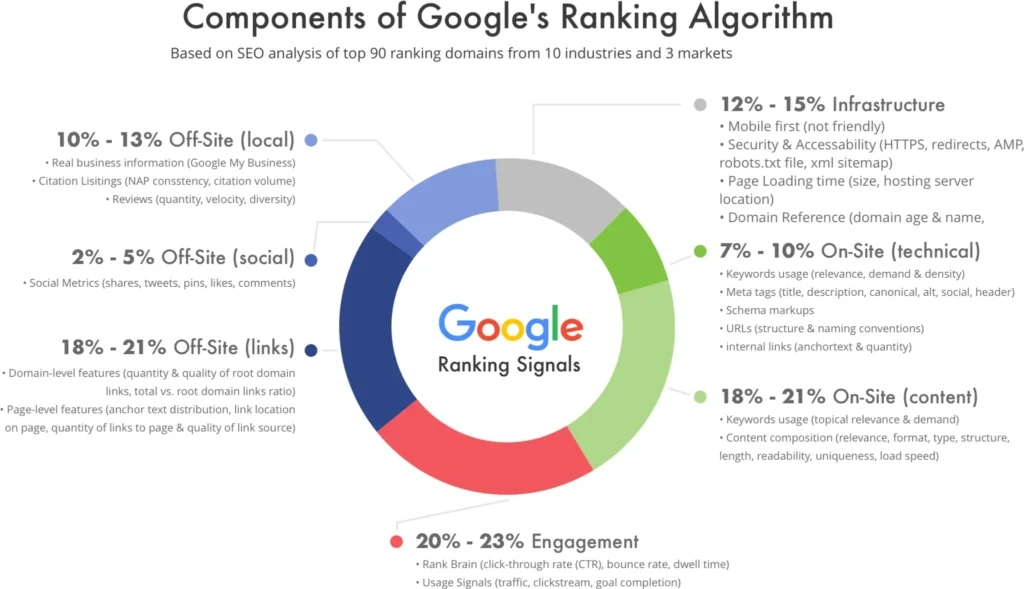
Google’s spam team actively hunts for PBN schemes because they manipulate search results. PBN links are a manipulative link building tactic that attempts to influence Google search results by creating unnatural links, which violate Google’s Webmaster Guidelines.
Google’s algorithms are designed to reward sites that use ethical link building tactics, such as earning legitimate backlinks from high-quality content, rather than relying on manipulative schemes like PBNs.
When Google discovers PBNs, the links are neutralized or removed from ranking calculations. Google’s Penguin algorithm was specifically designed to clean up spammy, low-quality backlinks and penalize manipulative link building tactics, including unnatural links from PBNs.
Modern Google algorithms frequently ignore PBN links entirely, leading to wasted investment, and Google often chooses to ignore PBN links rather than penalize the site they point to.
Get caught and you’ll face anything from ranking drops to complete removal from Google 🚫.
Pros and Cons of PBN Backlinks
| Pros | Cons |
| ✅ Create backlinks fast without outreach | ❌ Google can penalize or deindex your entire site |
| ✅ Total control over anchor text | ❌ Costs $20,000-$30,000 to build just 10 sites |
| ✅ Might work short-term if done carefully | ❌ Cheap PBN services sell worthless links |
| ✅ No relationship building required | ❌ Makes your website nearly impossible to sell |
Here’s why Google ignores most PBN links: If competitors could destroy your rankings just by buying cheap PBN links pointing to your site, everyone would weaponize this. So unless Google’s team determines you’re intentionally building fake links at scale, the algorithm usually just ignores suspicious patterns.
But human reviewers at Google still issue manual actions when they spot obvious violations. You’ll get a notification in Google Search Console.
Three ways Google handles PBNs:
- Ignore the links (SpamBrain’s AI automatically spots and ignores them with no penalty, but links don’t help)
- Manual actions (Human reviewers demote your rankings or remove you from search completely)
- Spam penalties (Sites running massive link schemes for profit get hit hardest)
Manual penalties require reconsideration requests after fixing violations, while algorithmic penalties stick around until Google’s next update detects you’ve cleaned up.
How to Detect PBN Footprints
PBN links show signs such as shared hosting, identical templates, over-optimized anchor text (usually more than 30% exact-match keywords), and no real traffic.
Tools like Ahrefs, Semrush, and Bing Webmaster Tools can identify these patterns.
🔍 SPOTTING PBN LINKS
The biggest signs: Multiple linking sites share the same IP address, have identical WordPress themes, show zero organic traffic despite high Domain Authority, and use 30%+ exact-match keyword anchors. Finding 3 or more of these patterns together strongly indicates a PBN.
Check your backlinks for these red flags:
- Same IP addresses (Multiple linking sites hosted on identical or nearby IP ranges)
- Hidden ownership (WHOIS privacy on all the domains, especially combined with other signs)
- Cookie-cutter designs (Same WordPress theme used across multiple linking sites)
- Keyword-stuffed anchors (More than 30% of anchor text using exact-match keywords; keyword rich anchor text is a common sign of PBNs)
- Garbage content (AI-written articles that barely make sense)
- No real traffic (High authority domains with zero keyword rankings in Ahrefs)
- Link spam ratios (Thousands of outbound links but almost no inbound links)
- Random niches (A plumbing site linking to a cryptocurrency blog makes no sense)
- Abandoned sites (Broken pages and copyright dates from 2019)
- Bulk registration (Dozens of domains registered on the same day)
- Blocked crawlers (Robots.txt files preventing Ahrefs and Semrush from seeing backlinks)
- Sudden link spikes (Going from 5 backlinks to 50 backlinks overnight)
Tools that catch PBNs:
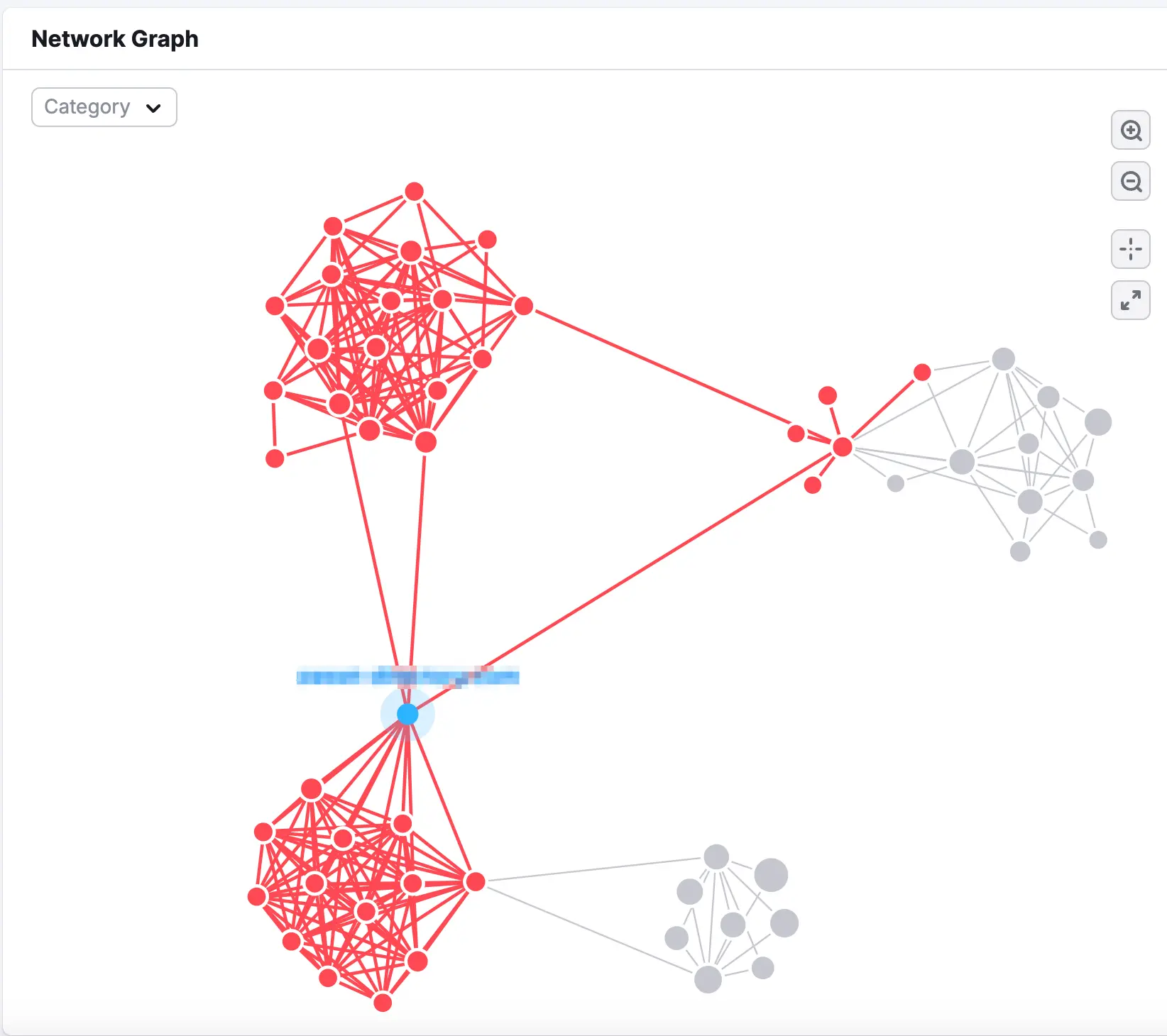
👉 Semrush Network Graph shows clusters of connected sites (red dot bundles = likely PBN).
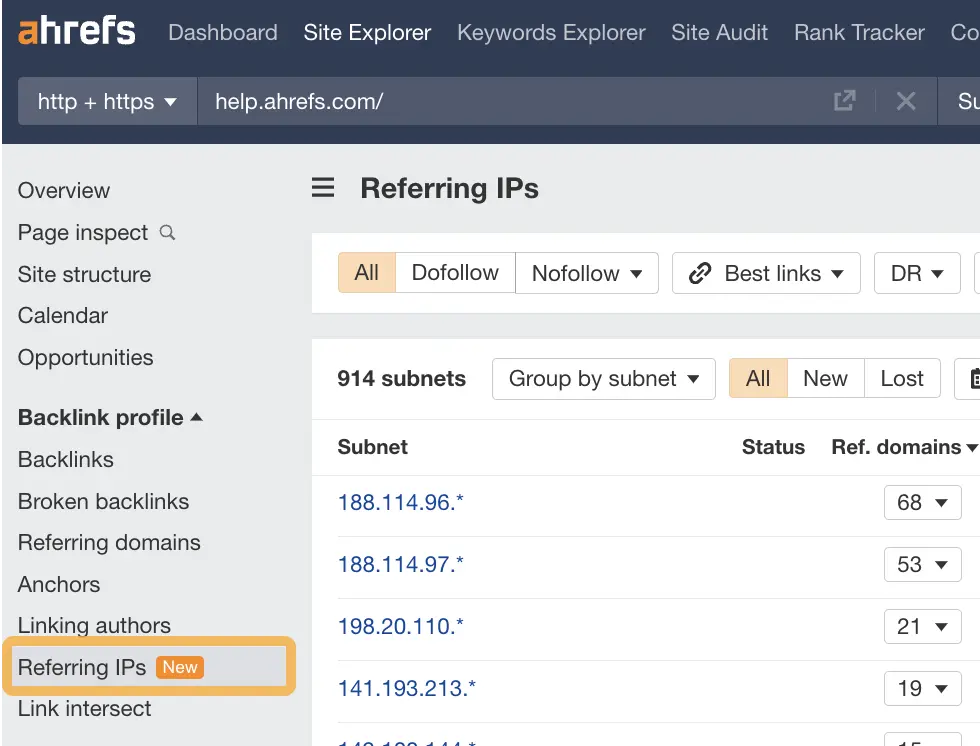
👉 Ahrefs Referring IP report reveals domains sharing hosting.
👉 Bing Webmaster Tools finds links even when sites block other crawlers.
These tools rely on search engine bots to crawl and analyze backlinks; if a site blocks search engine bots, it may be trying to hide PBN activity.
If you identify links that appear to come from private blog networks, take a structured approach to assess their impact. This may include reaching out to the site owner to request removal of harmful links.
Dealing with PBN Owners
Maintaining relationships with private blog network (PBN) owners can be challenging, especially when aiming to build a strong, sustainable backlink profile.
While some PBN owners may promise high-quality links from authoritative domains, the reality is that many of these links are low quality or even toxic. Working with the wrong PBN can result in your backlink profile being filled with suspicious links that put your site at risk.
Before collaborating with any PBN owner, conduct thorough research. Request transparency about their private blog network, ask for a list of domains, review the content quality, and look for signs of manipulative link building.
Be wary of anyone who guarantees rankings or promises overnight results, as these are red flags for tactics that violate search engine guidelines.
If you do decide to work with a PBN owner, make sure you retain control over the links. You should be able to remove any link if it becomes problematic.
Regularly monitor your backlink profile for suspicious links, and be prepared to disavow any that could trigger search engine penalties.
Ultimately, the safest approach is to focus your link building efforts on earning high quality links from reputable sources, rather than relying on risky PBNs.
What to Do if You Find PBN Links?
Found suspicious PBN links pointing to your site? Don’t panic.
Here’s what to do based on your situation.
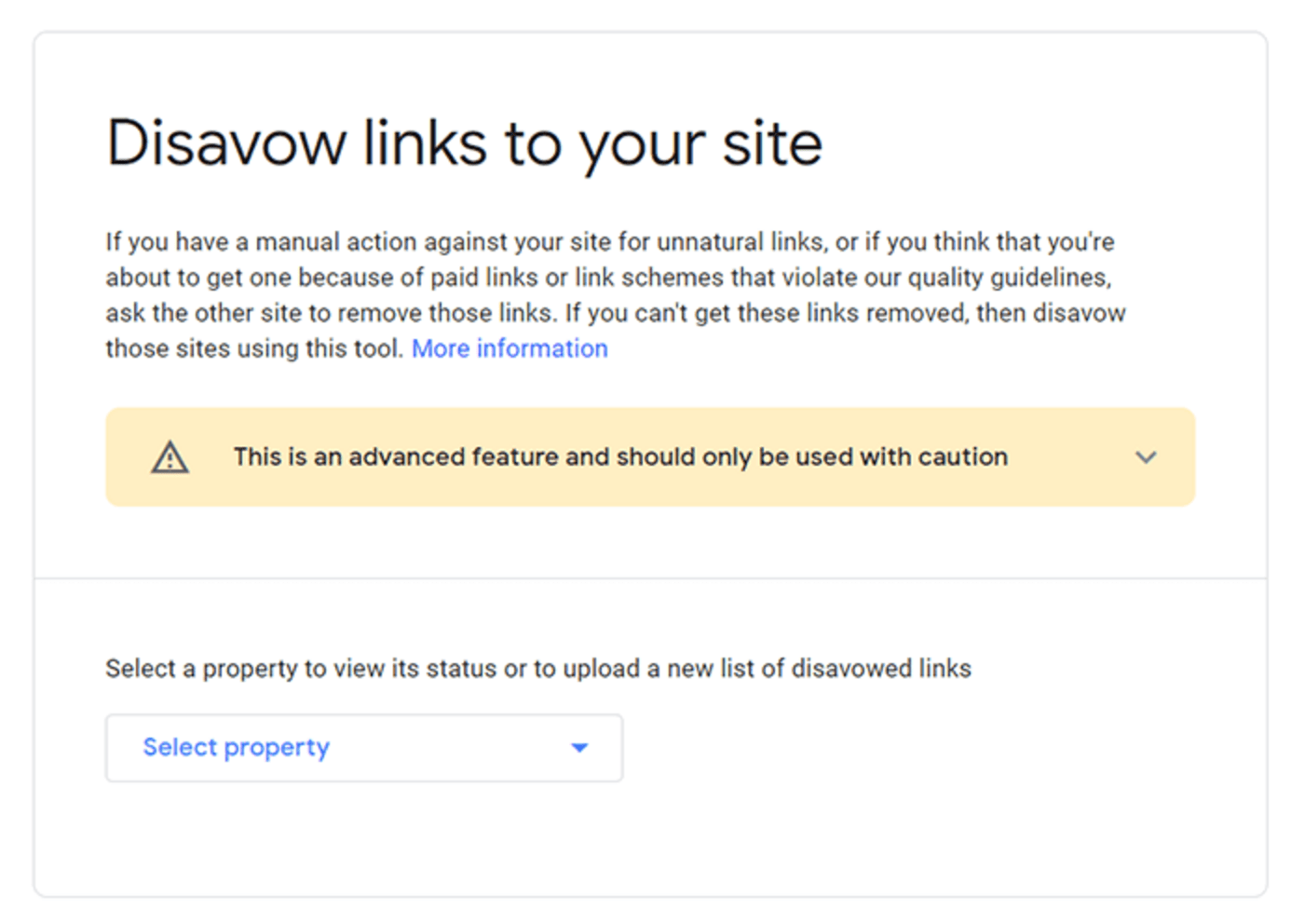
If you find PBN links, you can remove them by creating and uploading a disavow file to Google.
If you built them yourself: Remove the links immediately.
Contact the PBN site owners (even if that’s you) and delete the links. Then submit a reconsideration request in Google Search Console explaining you’ve removed the manipulative links. Be honest. Google’s team can tell when you’re lying.
If a competitor built them (negative SEO): Usually, do nothing. Google’s SpamBrain AI automatically ignores most suspicious links to protect you from attacks. Check your Search Console for manual action notifications. If you haven’t received one, the links probably aren’t hurting you.
If you hired an agency that built them: Fire them immediately. Get a list of every link they built. Remove what you can by contacting site owners. For links you can’t remove, use Google’s Disavow Tool as a last resort.
📌 IMPORTANT
Only use Google’s Disavow Tool if you receive a manual action notification in the Search Console. Most experts recommend against proactive disavowing. You might accidentally remove legitimate links, and SpamBrain already ignores suspected PBN links automatically.
When to use the Disavow Tool?
Only use it if you receive a manual action notification requiring link cleanup. The tool tells Google to ignore specific links, but you might accidentally disavow good links. Disavowing links does not remove them from the web but tells Google not to factor them into your site’s rankings. Most experts recommend avoiding it unless Google explicitly tells you to clean up your link profile.
False positives happen: Not every link that looks suspicious is a PBN. Some legitimate small blogs have cheap hosting, basic designs, and WHOIS privacy. Look for multiple footprints together. One or two signs don’t confirm a PBN.
For long-term SEO success and to improve your site’s rankings, focus on earning authoritative links through safe link-building strategies.
White-Hat Alternatives to PBNs
Guest posting, HARO outreach, and content marketing deliver sustainable rankings without the penalty risk. Recent industry data shows the majority of SEO professionals are investing more in white-hat link building strategies in 2025.
Emphasizing white hat SEO practices is crucial for long-term success, as these ethical strategies help build site authority and maintain search engine rankings.
Looking for link building that actually works without the risk?
We’ve tested dozens of providers and compiled a comprehensive breakdown of where you can safely acquire high-quality backlinks that won’t trigger penalties.
✅ Tactics that actually work:
- Guest posting (Build relationships with industry sites and earn editorial placements on high-authority domains for authoritative links)
- HARO (Help a Reporter Out) (Connect with journalists who need expert quotes for their articles in exchange for authoritative backlinks)
- Content marketing (Create original research, surveys, or comprehensive guides that other sites naturally want to reference, earning authoritative links)
- Broken link building (Find dead links on authority sites and offer your content as a replacement)
- Digital PR (Build relationships with reporters covering your industry for links from high-authority news sites; digital PR is a safe, scalable way to build authoritative links by pitching story ideas to journalists)
Next Steps: Protect Your Rankings
Ready to make sure your backlink profile is clean? Here’s what to do right now:
1. Audit your backlinks today. Export your backlink profile from Google Search Console or run it through Ahrefs Site Explorer. Look for the 12 PBN footprints listed above. Pay special attention to any links you didn’t build yourself.
2. Check your anchor text distribution. If more than 30% of your anchors are exact-match keywords, you’ve got a problem. Natural link profiles show mostly branded anchors, naked URLs, and generic phrases like “click here.”
3. Start building white-hat links now. Don’t wait for a penalty. Begin guest posting, pitching HARO queries, or creating linkable assets like original research. These tactics take longer than buying PBN links, but they won’t blow up in your face during the next algorithm update.
The choice is simple: Gamble with PBNs and risk losing everything, or invest in sustainable link building that compounds over time. Your rankings and your business deserve better than a ticking time bomb.
Build Backlinks the Right Way 🚀
The path to sustainable SEO success does not involve risky PBN schemes. It involves creating high-quality content that naturally attracts links, combined with strategic, white-hat link building to advance your progress without the risk of penalties.
If you’re looking for a professional link-building agency that specializes in penalty-proof tactics (not shady PBN networks), check out BuildingBacklinks.io.
Choose from niche edit packages, guest post placements, or custom white-hat campaigns tailored to your niche and goals. All strategies comply with Google’s guidelines, so you can sleep soundly knowing your rankings won’t vanish overnight.
Frequently Asked Questions
1) Are PBN backlinks illegal?
No, they’re not illegal by law. But they do violate Google’s guidelines. You won’t go to jail, but Google can demote your rankings or remove your site completely from search results.
2) Do PBN backlinks still work in 2026?
Sometimes, for a little while . If you build a really careful network with unique hosting and quality content, you might see short-term gains. But Google’s SpamBrain AI is getting better at detecting even well-built PBNs. Most networks get caught within months.
3) How Much Do PBN Backlinks Cost?
Individual PBN links typically cost $20-$100 each, plus $25-$80 per year in maintenance fees to keep the links active.
4) What Happens If Google Catches You Using a PBN?
Google sends a manual action notification through Search Console. Your rankings drop (sometimes by 60-70% of your traffic) within weeks. Manual actions can take 10-30 days to recover from if you fix everything fast.