
 ChatGPT
AI Mode
ChatGPT
AI Mode
 Claude
Perplexity
Grok
Claude
Perplexity
Grok
Last Updated on April 21, 2026 by Henry

Table of Contents
Real estate on the internet is not just competitive, it is crowded, fast-moving, and constantly shifting. Every agent is trying to be seen, every listing is fighting for attention, and the usual link-building advice often fades into the background without making a real impact.
This guide is built differently. It brings together six proven tactics, a clear cost versus impact matrix, and a step-by-step approach to niche edits so you are not just building links, but building a presence that actually shifts your local rankings in a meaningful way.
Behind every search is a person looking for a home, a neighborhood, or someone they can trust to guide one of the biggest decisions of their life. Buyers and sellers turn to search engines first, which means your visibility is not just about traffic; it is directly tied to your revenue and growth as an agency.
According to uSERP’s State of Backlinks for SEO, 67.5% of 800 SEOs surveyed say backlinks have a significant impact on rankings, a signal that holds just as strongly for real estate websites.
Why Real Estate Link Building Demands a Different Playbook Than Generic SEO
Geographic relevance shapes everything in real estate link acquisition. Generic strategies fall short because location is not a detail here; it is the foundation.
As a rule of thumb, a DR 40 editorial link from a city news outlet often creates a stronger local ranking impact than a DR 70 link from an unrelated national publication.
This reflects BrightLocal’s Local Search Ranking Factors research, where geographic keyword relevance and inbound link quality consistently stand among the most influential local organic signals.
Generic link building often leans heavily on raw domain authority, but real estate asks for something more layered and precise.
It brings in hyperlocal context like neighborhood names, cities, and metro areas, because Google’s local ranking system gives significant weight to geographic signals alongside traditional backlink strength, as highlighted in BrightLocal’s Local Search Ranking Factors.
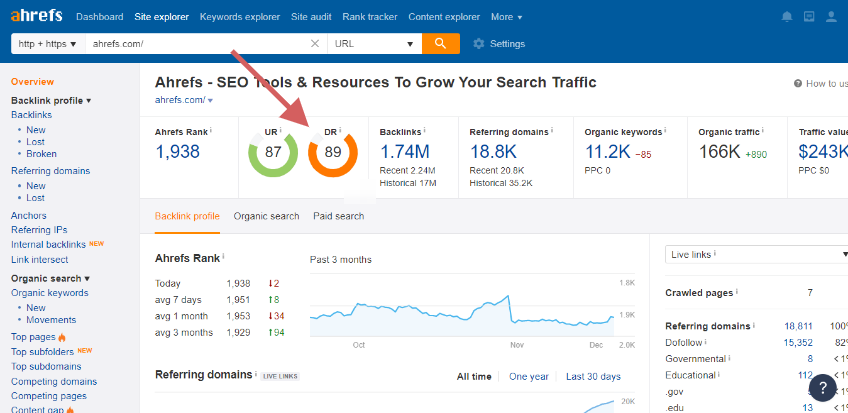
📊 What Is Domain Rating (DR)?
Domain Rating (DR) is Ahrefs’ 0–100 scale for measuring how strong a website’s backlink profile is.
- Logarithmic scale: Jumping from DR 70 → 80 is far harder than 20 → 30
- Third-party metric: DR is not a direct Google ranking signal
- Authority flow: Higher DR generally means more authority passed through links
- Context matters: A DR 40 local editorial link can outperform a DR 70 national one (BrightLocal, 2024)
The competition only sharpens this reality. Real estate remains one of the most searched and highly monetized local niches online, where visibility directly translates into opportunity.
Top-ranking pages in these spaces consistently hold a stronger base of referring domains than those below them, and the gap becomes even more pronounced in markets like New York, Los Angeles, or Miami, where countless agents and brokerages are all competing for the same search queries, a trend supported by Ahrefs SEO Statistics.
What makes real estate link building different from generic SEO link building?
Three factors set real estate link building apart from a generic campaign. Geographic anchor text carries more weight, as links that mention your city, neighborhood, or ZIP code strengthen the local relevance signals Google uses for map pack and organic rankings.
Topical relevance becomes essential, where a link from a home improvement blog holds more value than one from an unrelated lifestyle site, even at the same DR, a pattern widely supported by industry research, including Whitespark’s Local Search Ranking Factors.
Local citation consistency further strengthens both signals, as maintaining accurate NAP details across directories increases the trust of your editorial backlinks, a connection that generic campaigns often overlook.
Choosing the right tactic is less about what works best in general and more about what fits where you stand. Your budget, your timeline, and your existing domain authority quietly shape what will actually move the needle.
Each method brings a different mix of geographic relevance, link strength, and outreach effort, which makes alignment with your goals not just helpful, but necessary for meaningful results.
How long does it take to see results from real estate link building?
Niche edits placed on indexed, topically relevant pages typically produce measurable ranking movement in four to eight weeks. Digital PR campaigns and data-driven content generally require three to six months before organic traffic gains register in Google Analytics.
| Tactic | Avg. Cost per Link | Typical DR | Scalability | Time-to-Impact |
| Niche Edits / Link Insertions | $150–$500 | 30–60 | Medium | 4–8 weeks |
| Local Digital PR | $500–$2,000+ | 40–80 | Low | 2–4 months |
| Guest Posts | $100–$400 | 20–50 | High | 6–12 weeks |
| Data-Driven Content | $1,000–$5,000 (asset creation) | 30–70 | High (passive) | 3–6 months |
| Broken Link Building | $50–$150 | 20–50 | Medium | 4–10 weeks |
| Competitor Link Replication | $100–$400 | 25–55 | Medium | 6–12 weeks |
Cost and DR ranges are practitioner benchmarks drawn from the uSERP and Gotch SEO survey data.
Niche edits and broken link building are the fastest paths to ranking movement, both typically resolving within two months under favorable conditions.
Guest posts and competitor link replication sit in the middle range, scaling well but requiring six to twelve weeks to show measurable gains.
Local digital PR and data-driven content take the longest to pay off but tend to earn the highest-DR editorial placements and the most durable compounding returns.
High-authority contextual backlinks average $700–$2,000+ per link, according to uSERP’s State of Backlinks for SEO, a benchmark that anchors realistic budget planning for real estate businesses.
Local Digital PR: How to Earn Editorial Links From News Outlets
Editorial links from local news sites and neighborhood blogs carry outsized ranking power in real estate. They bring together topical authority, geographic relevance, and strong domain trust in a way few other links can.
In many cases, a single link from a city news outlet can outperform multiple generic directory links when it comes to local pack visibility.
At the center of it all is one thing that cannot be faked: newsworthiness. Real estate agencies that publish original market insights give journalists something valuable to cite, something they cannot easily recreate on their own.
The most reliable way to do this is through structured, data-driven content:
- Publish quarterly hyperlocal market reports
- Focus on median sale price, price per square foot, and days on market
- Break data down by neighborhood instead of broad city-level summaries
- Pair each report with a one-page “State of the Market” press release
- Share it with local news desks, community newsletter editors, and neighborhood group admins
If you want faster wins, timing becomes your advantage. Reactive PR often leads to quicker placements because it aligns with what journalists are already covering:
- Respond to major developments, zoning updates, or interest rate changes
- Offer expert quotes from agents or in-house economists
- Prioritize speed and relevance over polished storytelling
- For more predictable link acquisition, community involvement creates steady opportunities:
- Sponsor neighborhood events, school fundraisers, or local charity runs
- Earn placements on sponsor pages hosted on local domains
All of this ties back to one core advantage. Geographic relevance in editorial links directly strengthens local pack rankings, as supported by BrightLocal’s Local Search Ranking Factors.
A well-placed link from a city-focused publication consistently delivers more impact than a higher DR link with no connection to your market.
Niche Edits and Link Insertions for Real Estate Sites
🔗 What Is a Niche Edit?
A niche edit is placing your backlink inside existing, already-indexed content on a third-party site — also known as a link insertion or contextual edit.
- Different from guest posts: You’re adding to an existing page, not creating a new one
- Faster impact: The host page is already ranked and trusted, so link equity passes quicker
- Speed advantage: Ranking movement is often visible in 4–8 weeks (Gotch SEO, 2025)
- Typical cost: $150–$500 per placement for DR 30–60 sites
If you want faster movement without waiting months for new content to rank, this is where niche edits stand out. Instead of starting from scratch, you tap into pages that already have authority, traffic, and trust.
Done right, it’s one of the quickest ways to push rankings in competitive real estate SERPs.
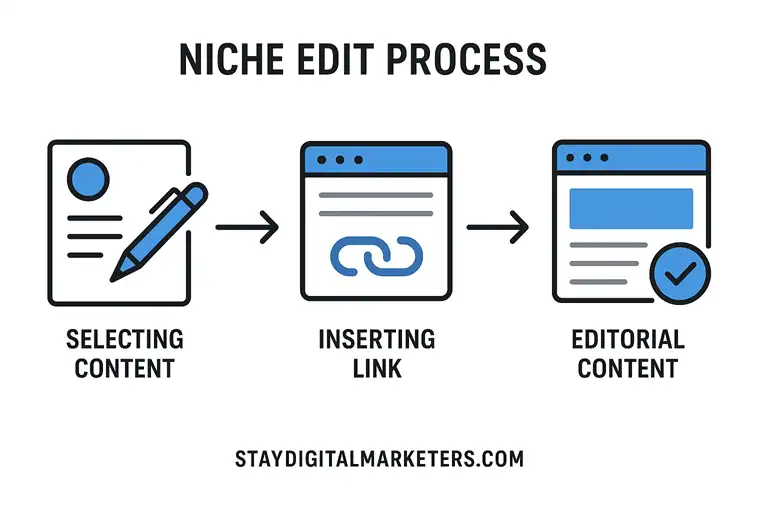
The reason it works so well comes down to momentum. You are not waiting for Google to discover and trust a new page; you are leveraging authority that already exists.
A 2025 Gotch SEO case study analyzing nearly $23K in niche edit spend showed a 70% success rate across 34 URLs, with the strongest results coming from pages that were already topically aligned.
Another analysis by The Website Flip, covering 96 URLs, reported 73.2% traffic growth within six months. The common thread was clear: Links placed within relevant, trusted content tend to move faster and perform better.
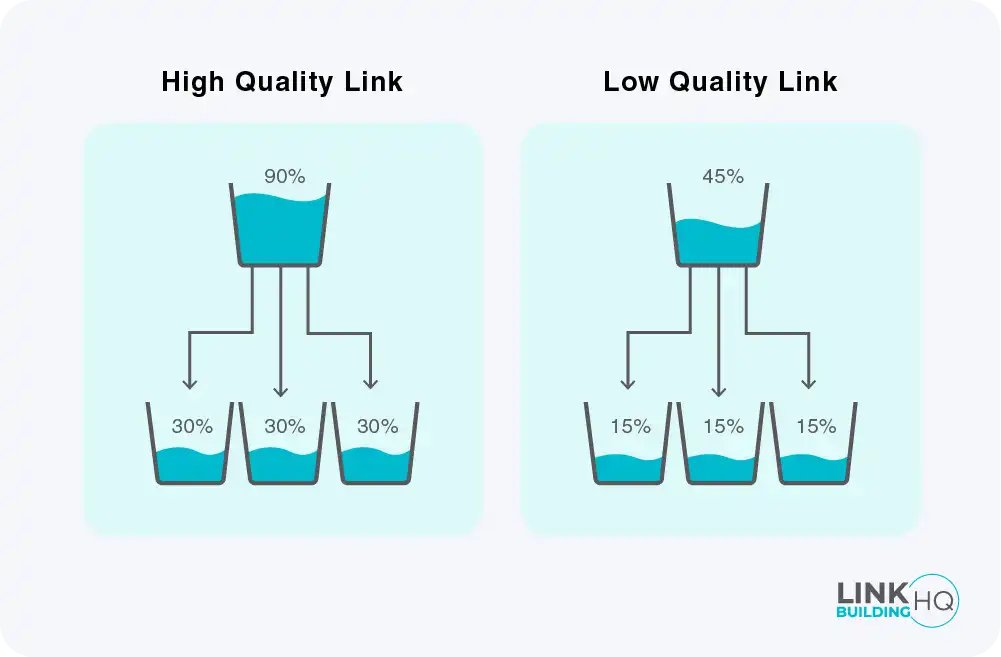
⚡ What Is Link Equity?
Link equity is the ranking authority a backlink passes from one page to another — often referred to as PageRank or link juice.
- Placement matters: Body content links pass more equity than footer or sidebar links
- Dilution effect: Pages with many outbound links reduce the equity each link receives
- Link type: No-follow links pass little to no equity — prioritize do-follow when possible
- Relevance: Topical alignment between pages increases how much equity transfers
Before starting outreach, you need four things in place: a target page on your real estate site (city guide, neighborhood page, property listing hub, or data resource), a list of 20–30 topically relevant sites in your niche or market, an outreach email template with a clear value proposition, and a link tracking sheet in Ahrefs, Google Search Console, or a simple spreadsheet.
- Identify target pages. Use Ahrefs Site Explorer or Google search operators (site:domain.com “neighborhood name”) to find pages on relevant real estate blogs, local news sites, and mortgage broker websites that already rank for your target keywords.
- Qualify by topical relevance first, DR second. A DR 35 page about “Austin home buying tips” is more valuable for a local Austin real estate website than a DR 60 page about “personal finance” with no geographic context.
- Find the right contact. Look for the site owner, content editor, or managing editor using Hunter.io, LinkedIn, or the site’s “About” or “Contact” page. Avoid contact forms; direct email converts at a higher rate.
- Write a short, direct pitch. Lead with the specific page you want to be inserted into, explain why your link adds value to their reader, and make the insertion easy by suggesting exact anchor text and the sentence it fits into.
- Follow up once after seven days. A single follow-up increases response rates significantly without damaging your sender reputation.
- Negotiate placement terms. Confirm the link will be in the body copy (not the footer or sidebar), that the page is not link-saturated (more than three to five external links become dilutive), and that it will remain live for at least 12 months.
- Track and audit quarterly. Add placed links to a shared sheet and audit them every 90 days using Ahrefs or Semrush to confirm they remain indexed and do-follow.
Under optimal conditions, with indexed pages and a strong topical match, niche edits typically produce measurable ranking movement in four to eight weeks.
Data-Driven Content That Earns Links in the Real Estate Vertical
If your content is not worth citing, it will not earn links. That is the reality in real estate SEO. The pages that attract backlinks are not generic blog posts; they are resources people actually reference, save, and share.
What works consistently is simple. Give people something they cannot easily recreate. That is why data-driven assets outperform everything else.
Backlinko’s link-building research identifies original data studies and interactive tools as the highest-yield formats across verticals, with real estate being no exception.
What Actually Earns Backlinks in Real Estate
Across the board, three content types stand out:
- Neighborhood guides built on original data
- Interactive affordability calculators
- Hyperlocal market reports
Each of these gives publishers, bloggers, and even lenders something valuable to cite.
1. Neighborhood Guides That Go Beyond Basics
These are not your usual “best places to live” posts. The ones that earn links include real, structured data:
- Walk scores
- School ratings
- Median price trends
- Commute times
Add a clear publish date and update the data regularly. This keeps your guide relevant, so journalists continue linking to your version instead of switching to newer sources.
2. Interactive Tools That Attract Passive Links
Tools bring in links without constant outreach.
An affordability calculator, for example, lets users input income, down payment, and loan terms to estimate what they can afford in specific areas.
Why this works:
- Mortgage brokers link to it
- Finance bloggers reference it
- Real estate platforms cite it
You are not just creating content, you are creating utility.
3. Hyperlocal Market Reports That Journalists Rely On
Local data is hard to gather, and that is exactly why it earns links.
Pull MLS data and turn it into simple, clear reports:
- Listing price vs sale price
- Days on market
- Inventory levels
Even a few well-presented charts can position your site as a go-to source for local media.
You can also expand with cost-of-living comparisons, which often attract links from relocation services, HR platforms, and lifestyle publications.
What Makes These Assets Work
All strong linkable content shares one thing. It answers a question people are already asking, using data they cannot easily find themselves.
That gap between curiosity and accessible data is where real estate link building really starts to scale.
Brand Mentions, Entity Signals, and AI Visibility
As of 2025, Google’s AI Overviews have quietly changed how visibility works, even in real estate. While most property searches still lean heavily on local packs and map results, the signals behind AI Overviews are influencing rankings in the background.
Real estate queries may not trigger AI Overviews as often as informational searches, but the same factors that help a brand appear in those summaries, strong entity signals and clear brand recognition, also strengthen your position in local organic results.
The takeaway is simple but important. It is no longer enough to rely on keyword targeting alone. Building your brand as a recognizable entity, something Google can identify, trust, and connect across the web, now plays a much bigger role than it did just a couple of years ago.
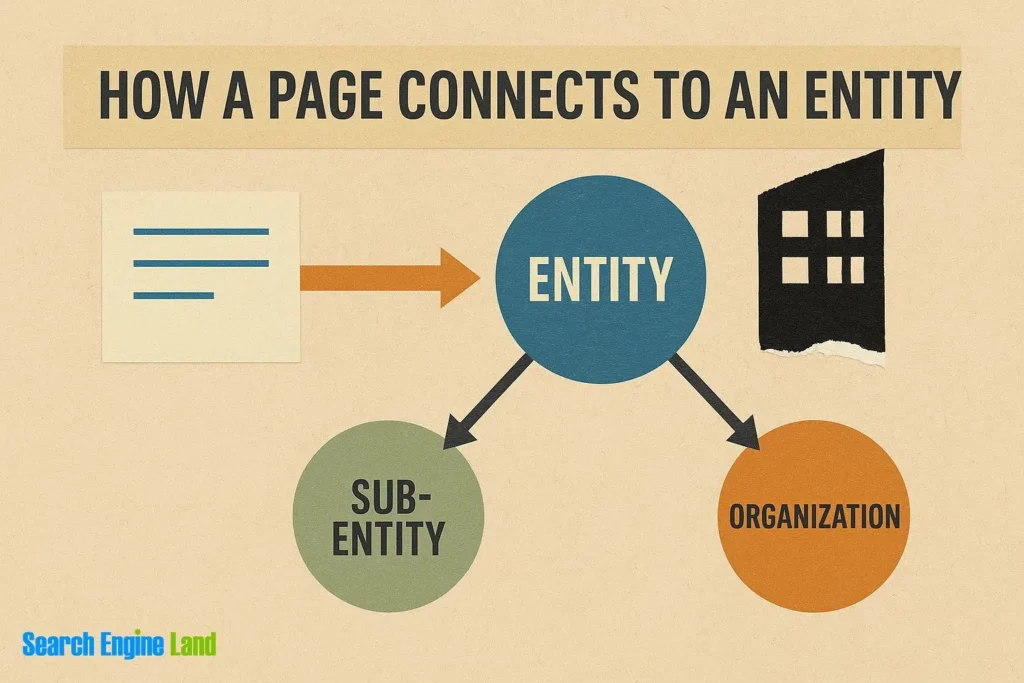
🧠 What Builds Strong Entity Signals?
- NAP consistency: Business name, address, and phone number must match across all directories
- Structured data: Use schema like LocalBusiness, RealEstateAgent, and Place
- Brand mentions: Citations across the web, even without links, still contribute to authority
As highlighted in Single Grain’s 2025 analysis, even unlinked mentions now count. Google’s natural language processing connects those mentions to your brand, turning simple citations into authority signals.
How Entity Signals Strengthen Local Rankings
In real estate, location is everything, and entity signals help Google connect you to it.
- Referencing neighborhoods, school districts, and landmarks strengthens geographic relevance, a point reinforced in Carrot’s 2024 study on how AI is reshaping real estate SEO
- Consistent NAP across directories builds trust
- Reviews on Google Business Profile add credibility and reinforce your presence
Schema markup speeds this up by clearly linking your business data to your entity, making it easier for search engines to understand where you belong.
Agencies that also build a healthy mix of reciprocal links with topically relevant local partners, keeping exchange ratios under 20% of total referring domains, add a layer of geographic anchor to their entity profile without triggering algorithmic red flags.
Why This Matters More Now
The shift toward entity-based SEO is not replacing link building; it is amplifying it.
As explained in Single Grain’s guide to Google AI Overviews in 2025, brands that combine strong backlinks with clear entity signals are the ones that hold stable, long-term rankings.
In simple terms, it is no longer just about ranking pages. It is about becoming a brand that Google can recognize, trust, and consistently show.
Agencies looking to maximize authority compounding can also explore tiered link building to amplify the strength of their existing Tier 1 placements, particularly useful when top-priority city pages need an authority push without adding more direct outreach placements.
Get Professional Real Estate Backlinks 🚀
In real estate SEO, visibility is not built overnight, and it is definitely not built on shortcuts. The sites that dominate local results are the ones doing two things right: creating content people naturally want to reference, and supporting it with smart, targeted backlinks that push rankings where it matters most.
It is that balance that drives real growth. Content earns attention, links accelerate it. Together, they help you compete in crowded city and neighborhood searches without relying only on ads.
If managing outreach, placements, and strategy feels like a full-time job, it does not have to be BuildingBacklinks.io helps real estate brands build high authority backlinks without the manual grind.
Whether you need niche edits, guest posts, or a custom mix tailored to your market and target locations, the focus stays the same: building links that actually move rankings and keep working long term.
Frequently Asked Questions
1) Why Are Backlinks Important for Real Estate SEO?
Backlinks signal domain authority to search engines, directly lifting rankings for competitive local queries. Ahrefs confirms that referring domains strongly correlate with higher rankings, a gap that widens in hypercompetitive local markets where top-ranking pages carry significantly more backlinks than lower-ranked competitors.
2) What Makes Real Estate Link Building Different From Generic Link Building?
Real estate link building is hyper-local by nature. Geographic relevance weighs heavily in Google’s local ranking algorithm, meaning a DR 40 editorial link from a city news outlet typically delivers a stronger local ranking lift than a DR 70 link from an unrelated national publication, consistent with BrightLocal’s Local Search Ranking Factors research.
3) How Long Does It Take To See Results From Real Estate Link Building
Niche edits placed on indexed, topically relevant pages typically produce measurable ranking movement in four to eight weeks under optimal conditions. Data-driven content and digital PR campaigns generally require three to six months before organic traffic gains register in Google Analytics.
4) What Content Earns The Most Backlinks for Real Estate Websites?
Neighborhood guides with original data, interactive affordability calculators, and hyperlocal market reports consistently attract the most real estate backlinks. These assets give journalists and mortgage lenders a citable data source they cannot easily replicate (Backlinko; uSERP, 2024).