
 ChatGPT
AI Mode
ChatGPT
AI Mode
 Claude
Perplexity
Grok
Claude
Perplexity
Grok
Last Updated on July 10, 2026 by Henry

Table of Contents
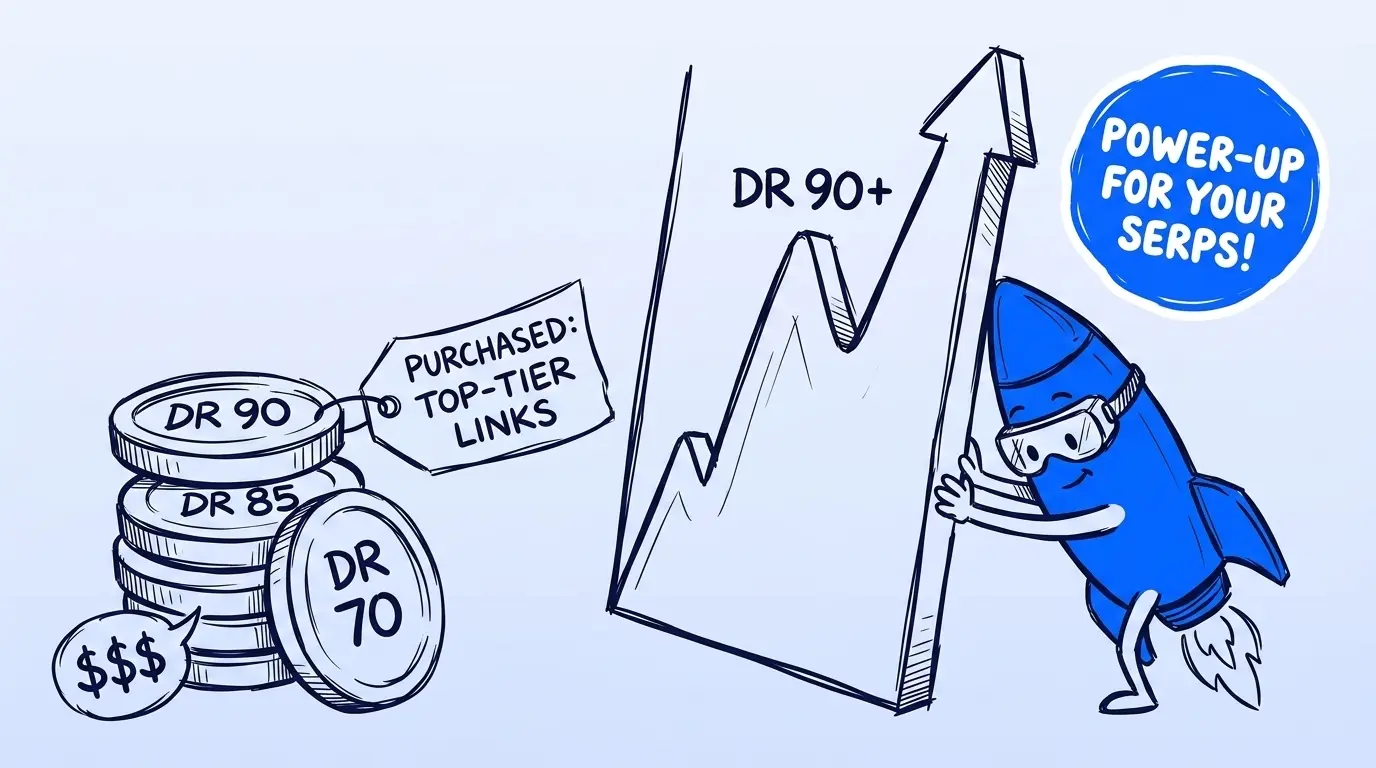
Buying backlinks means paying website owners to place links to your site in their content, and in 2026 that usually costs anywhere from about $150 to $1500 per link.
For SEO professionals, digital marketers, website owners, agencies, and businesses trying to improve rankings, paid links can supplement earned editorial links when quality, relevance, and placement are handled carefully.
We know high-quality links drive rankings. Plenty of studies link growth in organic traffic and better search positions to profiles filled with authoritative referring domains, highlighting what is link building’s role in SEO success.
Metrics like Domain Authority and Domain Rating can flag sites that are worth considering, but chasing those numbers alone won’t get results.
Buying backlinks is packed with sellers who push anyone toward big metrics while skipping deeper quality checks or relevance. Those numbers are just one part of the story. Real gains come when you factor in context, actual audience, and overall quality.
That’s why this guide breaks down what buying backlinks looks like in 2026, the main ways links are sold, typical pricing, the benefits and risks, how to judge backlink quality, red flags to avoid, safer alternatives, and which agencies, marketplaces, and tools are actually useful.
What Buying Backlinks Means in 2026?
Buying backlinks means paying website owners to place links to your site in their content (site owners may sell backlinks as a monetization strategy). Costs averaged $150 to $1,500 per link in 2026.
Google now devalues most paid links instead of penalizing them, making quality evaluation the critical factor for success.
The practice has evolved significantly since Google’s 2012 Penguin update, when paid links triggered algorithmic penalties.
Google uses machine-learning systems like SpamBrain to identify and neutralize low-quality paid backlinks without issuing manual penalties to the receiving site. This shift means you can buy links more safely if you choose high-traffic, topically relevant sources and avoid obvious link schemes.
Paid backlinks work best when they supplement, rather than replace, earned editorial links. Acquiring backlinks through legitimate means can improve your visibility in Google search results.
According to recent link velocity studies a natural backlink profile contains 60-70% organic links from content marketing and 30-40% strategic paid placements.
The Benefits of Buying Backlinks?
Investing in high-quality backlinks improves your website’s SEO in several ways. One immediate benefit is increased organic traffic.
When reputable, relevant sites link to yours, you are more likely to attract visitors who are genuinely interested in your content or services.
Such backlinks serve as endorsements in the eyes of search engines, helping your site rank higher in search results and increasing visibility to customers.
To assess the effectiveness of your backlink efforts, regularly check your website’s Google rankings and track changes over time.
Not all backlinks are equally valuable. Backlinks from authoritative, relevant websites can improve your site’s performance, but buying links from low-quality or unrelated sources can have negative consequences, including a Google penalty that harms your rankings and reputation.
Is It Worth Buying Backlinks?
Buying backlinks provides measurable value when sourced from established sites with verified traffic and relevant topical relevance.
When integrated into a comprehensive SEO strategy, purchasing backlinks can significantly impact SEO performance by enhancing rankings and increasing domain authority.
The 2025 State of Link Building report shows that 91.9% of SEO professionals believe their competitors buy backlinks, and 78.1% report achieving ROI from link building investments.
🔍 When to Buy and When to Avoid
✅ Buy backlinks when organic outreach fails to secure placements in competitive niches, when time constraints prevent manual relationship building, or when you need initial authority signals for new domains, especially for brand new sites.
❌ Avoid buying links if your budget only allows cheap bulk packages under $200 for 50 or more placements, since bulk link buying at that level usually means weak inventory. These are usually low quality and can harm your site. In practice, cheap backlinks at ultra-low prices often come from spammy sources.
Such offers often indicate PBN networks that Google devalues within 30–60 days.
This approach keeps your process efficient and helps you avoid costly mistakes.
Which Link Building Methods Actually Work in 2026?
In 2026 the most effective methods for buying backlinks are niche edits, guest-post placements, sponsored articles, digital PR campaigns, EDU-site links, and white-label link packages.
1. Niche Edits (Link Insertions)
Niche edits are backlinks added to existing, relevant articles on other websites. Site owners insert your link into already published pages. Placing a backlink within a relevant page maximizes SEO benefits.
Costs range from $50 to $360 per placement depending on site authority. Mid-level niche edits typically cost $180 to $300 or more.
Dofollow backlinks from niche edits can transfer significant link equity. Before purchasing, verify that the target page receives organic traffic using Ahrefs Site Explorer.
2. Guest Posting
Guest posting is a link-building strategy where you contribute a unique article to another website in your niche and include a backlink to your site in the content.
You provide original content (800-1,500 words) that the publisher reviews and publishes with your backlink included. Pricing varies significantly by domain rating:
High Domain Rating (DR 50+): $300 to $1,000+ per post
Medium Domain Rating (DR 30-50): $120 to $300 per post
Low Domain Rating (DR < 30): $50 to $150 per post
Many businesses pay for high-quality backlinks through paid guest posts to improve search rankings and domain authority.
Choose sites that accept 2-4 guest posts per month rather than more than 20, since the latter often indicates link farms. Identify reputable, relevant sites for outreach.
3. Sponsored Content
Sponsored content refers to backlinks obtained by paying another website to publish material, often labeled “sponsored” or “partner content,” that includes your link and brand.
Publishers create branded content that features your product or service and includes backlinks to your site.
Costs typically range from $200 to $800 for mid-tier blogs, with higher prices for major outlets. Prices can vary. Disclosure of “sponsored” or “partner content” is required to comply with Google’s policies.
Links in sponsored content can influence your site’s authority, but they may be marked with rel=”sponsored” or rel=”nofollow” tags.
4. Digital PR Placements:
Digital PR placements involve earning editorial backlinks through press releases, outreach, or newsworthy campaigns, resulting in coverage and links from media and other authoritative sites.
PR agencies obtain links by pitching newsworthy stories to news sites and media outlets. They often create content that naturally attracts links.
High-quality backlinks acquired through outreach typically cost between $1,000 and $2,500 or more per link, with an average of about $1,500 per placement. A recent link-building survey found that 48.6% of SEO professionals prioritize digital PR as their primary method.
5. EDU Backlinks
EDU backlinks are backlinks that originate from educational institution domains (.edu), usually obtained through scholarships, resource listings, or academic partnerships.
Educational institutions (.edu domains) provide scholarship pages, resource directories, and sponsored research opportunities that include backlinks. Avoid .edu link sellers offering bulk packages, as they often exploit compromised university blogs.
6. White-Label Link Building Services
Link-building work performed by a third-party provider that acquires backlinks on your behalf under your company’s or client’s branding is called white-label link building.
Agencies obtain links through their established publisher networks. Quality link-building services offer a range of backlink packages and secure placements on authoritative sites. Verify that the agency provides transparency reports with the exact placement URLs and relevant metrics.
7. Marketplace Platforms
Marketplace platforms are self-serve systems that connect buyers with verified site owners and let users browse, purchase, and manage link placements using filters such as topic, price, and other criteria.
Sites like Bazoom and Collaborator connect buyers with publishers. You can view available placements filtered by domain rating, traffic, and topic, then purchase them directly.
How Much Backlinks Cost in 2026
| Link Type | Average Cost | Best For |
| Niche Edits (Low DR) | $50 – $200 | Budget-conscious buyers needing quick placements |
| Niche Edits (Mid DR) | $100 – $250 | Standard quality backlinks on established sites |
| Guest Posts (DR 30-50) | $120 – $300 | Controlled anchor text and context |
| Guest Posts (DR 50+) | $300 – $1,000+ | High-authority content placements |
| Digital PR Links | $1,000 – $2,500+ | Premium news site and media outlet placements |
Three main factors that determine backlink pricing (beyond domain metrics):
Monthly traffic volume: Sites with over 50,000 visitors per month may charge 30–50% more for backlinks.
Niche competitiveness: Links in saturated markets (finance, legal, health) cost 40–60% more than general topics.
Geographic targeting: US-only placements usually increase costs by 20–30% compared to international options.
While some providers advertise affordable prices for backlinks and social signals, it’s important to understand what links cost in relation to quality and long-term SEO value.
Quality backlinks consistently outperform cheap bulk links. Most reputable SEO agencies recommend investing $1,500–$3,000+ per month to secure a handful of high-authority placements, as these deliver far more reliable ranking gains than low-cost, low-quality link packages.
⚡ What Is Link Velocity?
Link velocity measures how quickly you acquire new backlinks over time. Building 50 links in one week may seem suspicious to Google, while gaining 5–7 quality links per month appears more natural. Maintain steady, gradual growth, as sudden spikes can trigger manual reviews and algorithmic filters.
How to Evaluate Backlink Quality?
The most effective links come from websites and pages focused on your industry or topic, rather than from high-traffic or high-metric sites that do not share relevant subject matter. Links from other reputable websites with strong authority are valuable and can greatly enhance your SEO when they are relevant and trustworthy.
A single backlink from a respected, thematically related site even if its Domain Rating (DR) or Domain Authority (DA) is modest will usually have more SEO value than a link from an unrelated “authority” platform.
While DR and DA are third-party metrics that can give a general sense of a site’s trust, they don’t guarantee value. Google strongly favors topical alignment, natural placement, and editorial trust over arbitrary numbers.
What Are DA and DR?
🔗 DA (Domain Authority): A Moz score from 0-100 that estimates a website’s ability to rank on Google, based on links, popularity, and other SEO signals.
🌐 DR (Domain Rating): An Ahrefs score (0-100) that measures the strength of a site’s backlink profile. The more high-quality referring domains a site has, the higher its DR.
Prioritize links from sites that share your target audience and expertise, regardless of scale or external scores.
What Makes a Backlink Quality One?
1) Verify Traffic and Domain Authority
Use trusted third-party SEO tools such as Ahrefs, SEMrush, or SimilarWeb to verify traffic and domain authority. Confirm the domain receives organic visitors and that traffic has remained stable or increased over the past six months.
Traffic from the linking site that is relevant to your audience increases a backlink’s value, since it brings visitors who are more likely to engage with your content.
Check that the site’s domain rating is above 30 for standard links and preferably above 50 in competitive niches. Be cautious with sites that have lost more than 30 percent of their traffic, as this may indicate algorithm problems or declining authority.
2) Check Topical Relevance
The linking site should publish content related to your industry or adjacent topics that share an audience. A backlink from a pet care blog to your SaaS product provides little value due to the mismatch in topics.
Use Google search operator “site:targetdomain.com [your keyword]” to verify they publish relevant content. Topically aligned links transfer 2.3x more authority than random placements.
3) Calculate Outbound Link Density
Review five recent articles on the target site and count external links, then divide by total word count. Quality sites maintain fewer than 10 outbound links per 1,000 words.
Sites exceeding 15 outbound links per 1,000 words operate as link farms. Search “site:targetdomain.com sponsored” to count paid posts more than 20 sponsored articles monthly risks Google devaluation.
4) Analyze Link Placement Context
Links embedded naturally in relevant paragraphs carry more authority than footer links, sidebar widgets, or author-bio boxes. The 150 words surrounding a link should directly relate to the linked content. Avoid sites that place all external links in a dedicated “resources” section at the end of articles, since that often indicates paid link insertion.
5) Check Historical Backlink Profile
Use Ahrefs Backlink Checker to review where the site earns its backlinks. High-quality sites attract links from other authoritative domains rather than reciprocal linking schemes or PBN networks.
Red flags include sudden backlink spikes (more than 100 new links in one week), links from unrelated foreign-language sites, or excessive use of exact-match anchor text patterns exceeding 20% of total backlinks.
🎯 Understanding Anchor Text Distribution
Anchor text distribution is the balanced mix of different clickable text types in backlinks that signals a natural and relevant link profile to search engines.
- 30–40% branded anchors (your company name)
- 20–30% naked URLs (yoursite.com)
- 15–25% generic terms (click here, learn more)
- 10–15% exact-match keywords
- 5–10% partial-match keywords
Excessive exact-match anchors (over 20%) can signal manipulation to Google.
Top Link Building Agencies and Marketplaces
1. Fatjoe
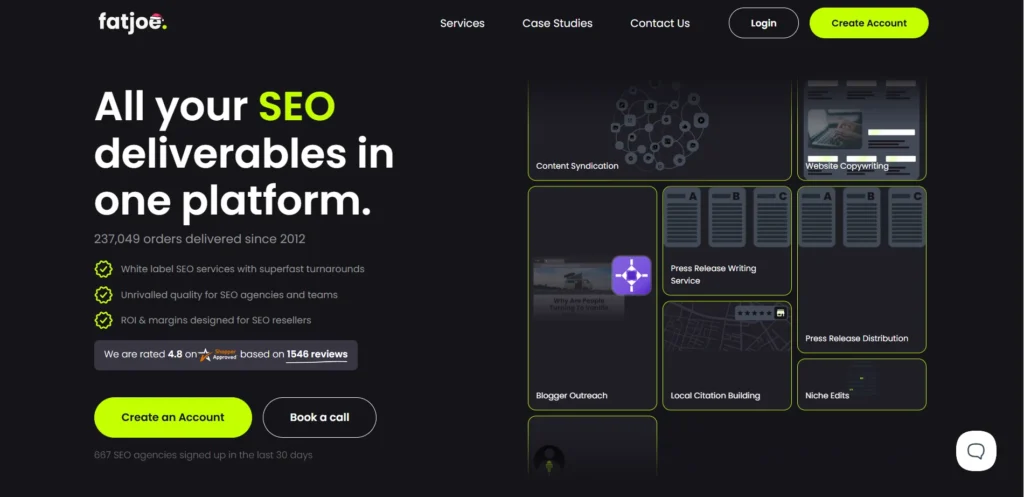
Fatjoe operates a hybrid marketplace and managed service model with over 20,000 publishers and optional content creation services. The platform offers instant direct response and traffic metrics for self-service buyers or full campaign management for clients who prefer a hands-off approach.
Pricing transparency displays exact costs before purchase, with no hidden fees. Tracking referral traffic from acquired backlinks is essential for measuring the effectiveness of your link building campaigns.
2. Legiit
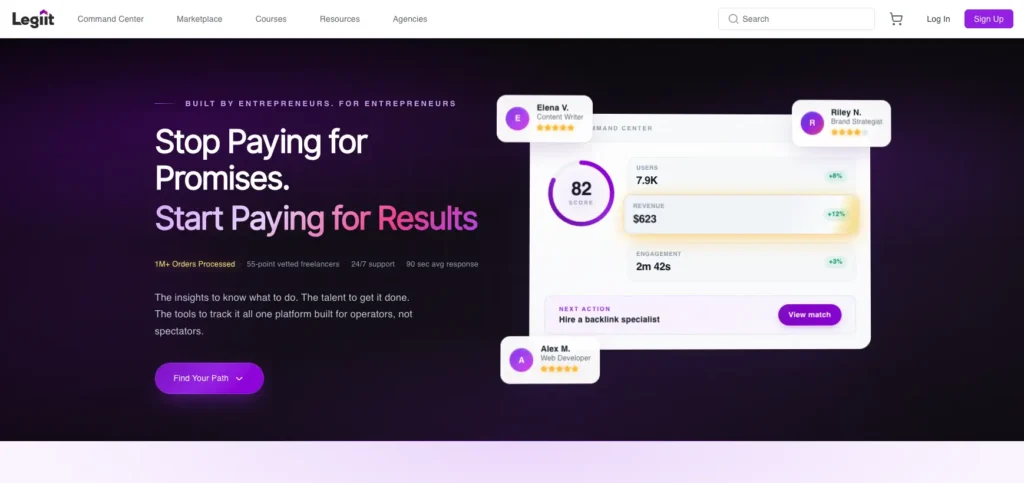
Legiit is a freelance SEO marketplace where businesses can hire vetted SEO specialists for link building services, including guest posts, niche edits, blogger outreach, local SEO links, press releases, and white-label SEO support. Unlike a single agency with fixed packages, Legiit gives buyers the flexibility to compare sellers, review service details, check ratings, and choose link building offers based on budget, niche, turnaround time, and campaign goals.
The platform is especially useful for agencies, small businesses, affiliate site owners, and SEO teams that want more control over how they buy backlinks without committing to a large monthly retainer. Buyers can find both one-off backlink services and recurring SEO support, making it a practical option for testing link quality, scaling campaigns, or outsourcing client work.
Legiit works best when buyers carefully review seller history, link examples, traffic quality, niche relevance, and reporting standards before ordering. For users who know how to evaluate backlink quality, it can be one of the most flexible and cost-effective places to buy backlinks in 2026.
3. Getlinko
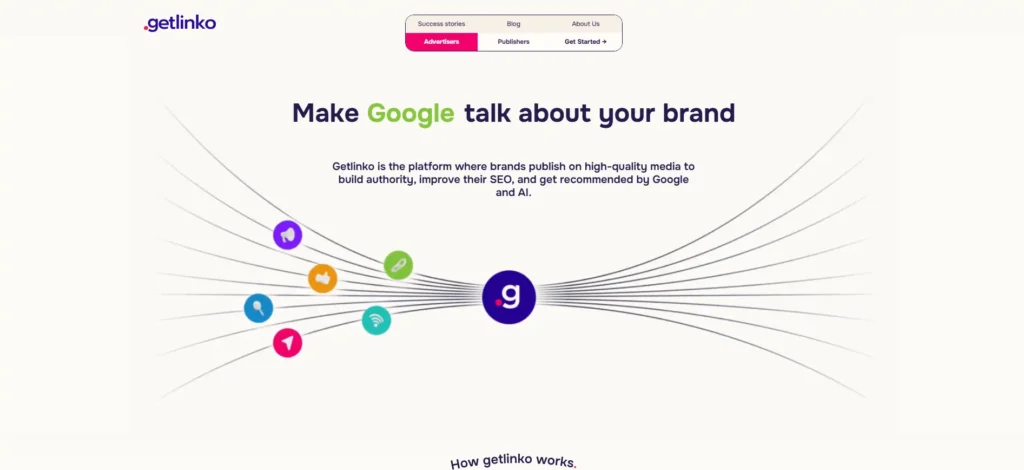
Getlinko is a branded content marketplace ideal for link building, which is key to skyrocketing SEO rankings and AI visibility through guest posts and branded content. The platform stands out for its hyper-segmented catalog of over 35,000 media outlets, allowing you to strategically filter by authority, organic traffic, and key SEO metrics to ensure high-impact backlinks; it also features a free demo that you can book directly on their website.
4. Respona
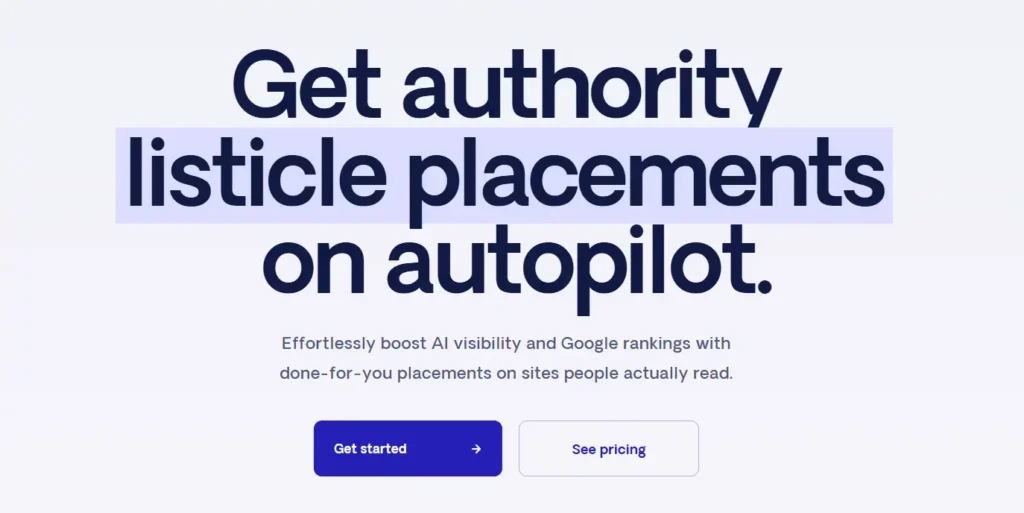
Done-for-you link building service that pairs manual outreach with an AI visibility tracker, built for brands and agencies chasing both rankings and AI citations.
Respona runs the entire process for you. You place an order with your target URL, anchor text, and the AI prompts you want to get cited for, and its team handles prospecting, outreach, follow-ups, and placement. Every backlink is editorial, on a real page with real traffic, and the platform finds articles that already rank and already get cited across ChatGPT, Perplexity, and Google AI Overviews.
Pricing is pay-per-placement, from $100 per link (DR 20+) up to $500 (DR 60+), with no monthly retainer or setup fees. A built-in tracker monitors your brand across six AI engines, and around 80% of customers are agencies white-labeling the service to their own clients.
5. LinkBuilder.io
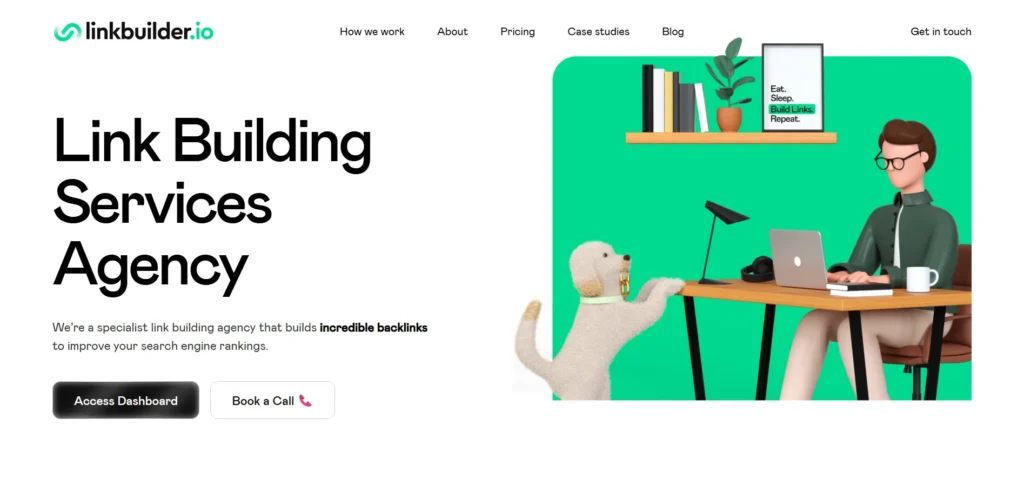
LinkBuilder.io specializes in niche edits on existing high-traffic content with an average DR of 60 across their network.
The agency emphasizes topical relevance matching and provides detailed placement reports that include the exact paragraph location, surrounding context, and anchor text. They serve more than 300 brands with monthly link building packages.
6. Editorial.Link
Editorial.Link offers verified traffic screenshots and domain history reports for each listed placement.
The platform focuses on DR 50+ publishers with established organic traffic and editorial standards. Clear metrics display precise monthly visitors, top-ranking keywords, and average link retention duration.
7. Authority Builders

Authority Builders has built a strong network over more than 10 years of operation, requiring a minimum DR of 50 and over 5,000 monthly visitors.
The agency manages all outreach, content creation, and placement coordination. They guarantee that links stay active for at least 12 months, with annual audits to ensure quality.
8. uSERP
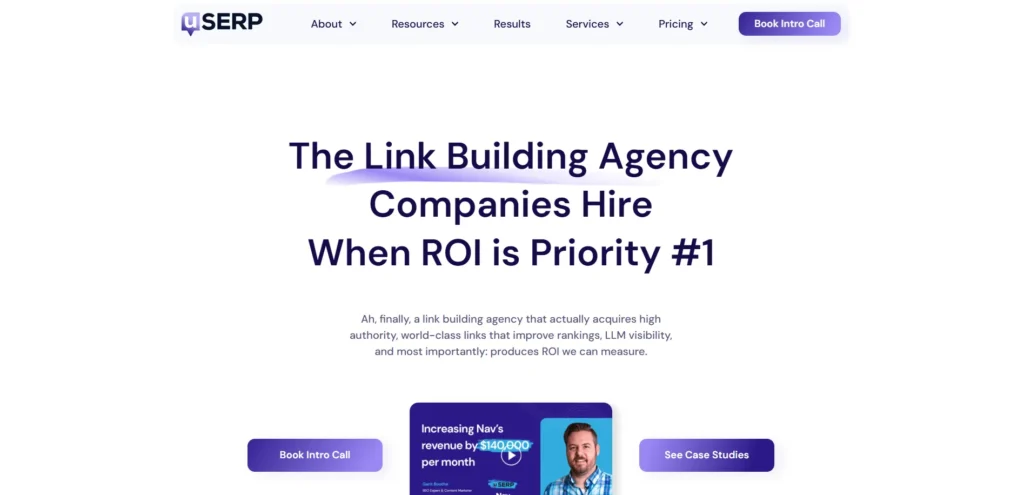
uSERP specializes solely in digital PR placements on news sites, industry publications, and media outlets with DR 70-90.
The agency pitches newsworthy story angles to journalists and secures editorial mentions with backlinks. Campaigns include strategy development, journalist outreach, and content creation.
9. The Hoth

The Hoth offers tiered link building packages ranging from $750 to $2,000 per month, including 5-15 placements depending on the package level.
The full-service agency manages prospect research, outreach, content creation, and placement tracking. They provide monthly reports that detail all acquired backlinks along with relevant metrics.
10. Stan Ventures
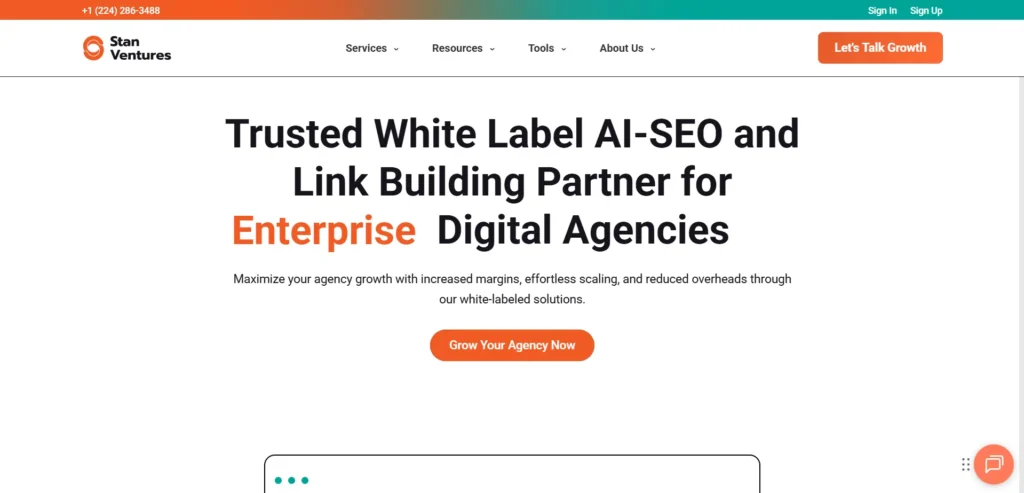
Stan Ventures offers white-label link building services for agencies reselling to clients. The platform provides rebrandable reports, access to a client portal, and campaign management tools. It works with publishers having a minimum DR of 40, using 100% manual outreach and relationship-based placements.
11. Loganix
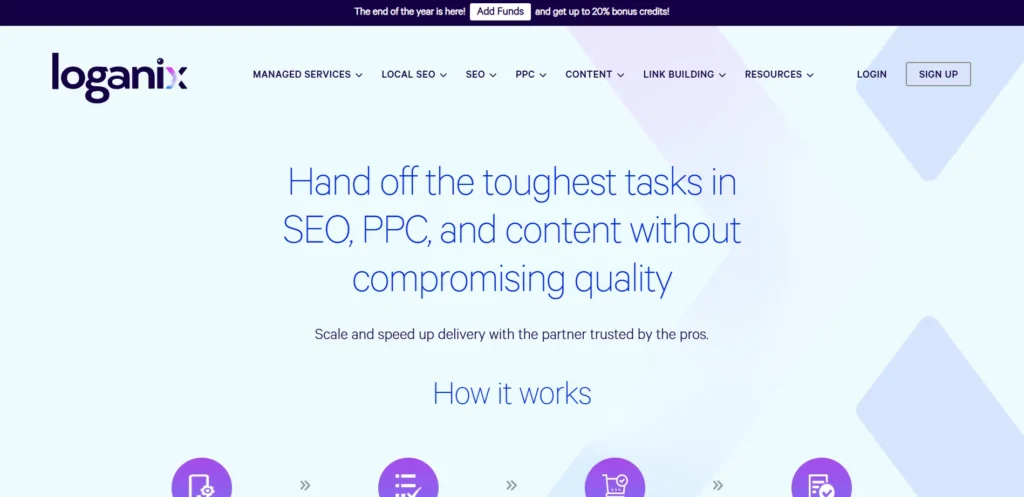
Loganix specializes in local SEO backlinks for service businesses through geo-targeted publisher networks in over 200 US metro areas.
The platform emphasizes local directories, regional news sites, and community blogs that reach relevant local audiences. Monthly packages include 10-30 local citations and backlinks.
12. Bazoom
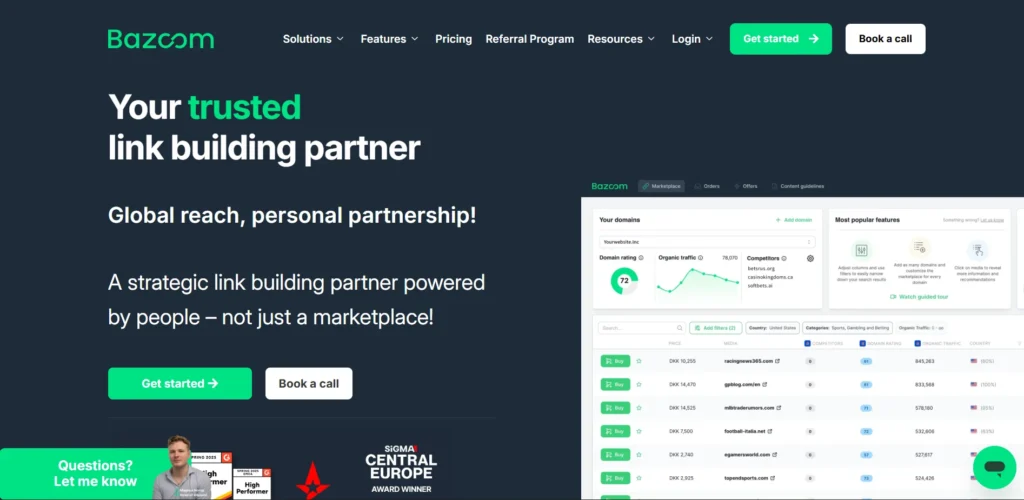
Bazoom operates the largest backlink marketplace with over 100,000 curated outlets across more than 150 niches. You can filter available placements by domain rating (DR 30-90), traffic volume, price range ($300-$1,500), and topical category.
The platform offers transparent metrics, including the exact URL, DR score, monthly traffic estimates, and average turnaround time before purchase. Bazoom also enables publishers to sell backlinks, allowing them to monetize their sites by offering link placements to buyers.
13. Collaborator
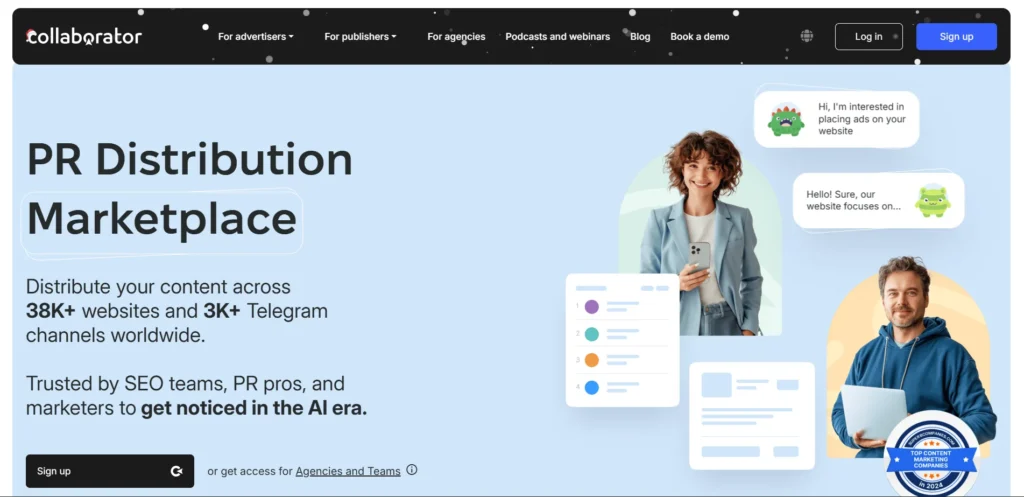
Collaborator offers a 3-month link deletion insurance that refunds your payment if the publisher removes your backlink before 90 days. The marketplace features over 15,000 publishers with a minimum DR of 40. You submit content or request publisher-created articles, then approve the placements before they go live.
Collaborator allows you to sell backlinks, giving publishers an additional revenue stream through sponsored content and link sales.
What Red Flags Should You Avoid When Buying Backlinks?
1) Bulk Package Promises Under $200
Sellers offering 50-100 backlinks for $100-$200 universally operate PBN networks or automated blog comment spam. Blog comments are a common source of low-quality backlinks that can harm your SEO.
These placements originate from expired domains repurposed as link farms or WordPress sites with thin content..
2) Excessive Sponsored Content Markers
Sites publishing five or more articles tagged “sponsored,” “partner content,” or “paid post” per 1,000 words of content primarily act as link sellers rather than legitimate publishers.
Use Google search operator “site:targetdomain.com sponsored“ to count paid posts. Results exceeding 50 sponsored articles suggest the site prioritizes paid placements over the quality of editorial content.
3) Traffic Decline Patterns
Sites losing more than 30% of organic traffic over six months may be affected by algorithm penalties, content freshness issues, or technical SEO problems that reduce authority. Review Ahrefs Site Explorer traffic graphs for the past 12 months to identify a consistent decline indicating deteriorating quality.
Avoid sites that experience sudden traffic drops of more than 50% in a single month, as these may indicate manual penalties.
4) Private Blog Network (PBN) Affiliations
Private blog networks consist of expired domains repurposed solely for link building, featuring thin content and identical design templates. Red flags include:
❌ Sites hosted within the same IP address ranges
❌ Identical Google Analytics codes used across different domains
❌ Content published on the same dates across multiple sites
Use tools like Who.is to check hosting providers and registration dates.
5) Guaranteed Ranking Promises
No legitimate link building service can guarantee specific ranking positions because search algorithms evaluate over 200 factors beyond backlinks alone.
Sellers claiming to guarantee a “first page” ranking or a “rank #1 in 30 days” use manipulative tactics that may lead to penalties. Reputable agencies offer guarantees based on the number of placements or efforts rather than specific rankings.
6) Anonymous Fiverr and Freelancer Sellers
Sellers on gig platforms who do not provide verifiable company information, client testimonials, or example placements hide quality concerns and lack accountability.
Legitimate agencies operate branded websites that display team members, case studies, and clear pricing. Fiverr sellers often offer “high DA backlinks” for $50-$150, sourcing links from PBNs or automated directories that do not transfer authority.
Buying Links vs Building Them?
Website owners face a strategic decision when it comes to acquiring quality links: should you buy backlinks or build them organically? Buying backlinks can be an effective way to quickly obtain high-authority links, especially for new sites or those in highly competitive niches where organic outreach may be slow or difficult.
While purchasing links can be more costly and carries the risk of acquiring low-quality links if not done carefully, natural link building is generally more sustainable and cost-efficient over time.
The most successful backlink strategy often combines both methods: supplementing your organic efforts with carefully chosen paid placements from reputable sources.
This balanced approach enables you to build links efficiently while preserving the integrity and effectiveness of your SEO campaign.
What Are Safer Alternatives to Buying Links?
Digital PR campaigns generate backlinks at 48.6% adoption rate versus 16% for traditional guest posting in 2026, with HARO source requests, unlinked brand mention conversion, resource page outreach, and original research creation delivering sustainable results.
1) Digital PR and Journalist Outreach
Pitch newsworthy stories to journalists using platforms like HARO (Help A Reporter Out), Qwoted, and Featured. Journalists seek expert sources daily for articles in major publications. You provide quotes and insights in exchange for backlinks from high-authority news sites. This method generates DR 70-90 links from legitimate editorial mentions.
📌 Dedicate 2-3 hours daily to monitoring journalist queries across 5-10 relevant topics
📌 Respond within 30 minutes of query posting with 150-200 word expert insights citing specific data or case examples
📌 Successful responses convert to placements at an 8-12% rate, requiring 30-40 pitches each month to earn 3-5 quality backlinks.
2) Unlinked Brand Mention Conversion
Monitor the web for brand name mentions without hyperlinks using tools such as Google Alerts, Ahrefs Content Explorer, or Mention.com. Contact site owners to request that they convert existing mentions into clickable backlinks. This approach builds on existing brand awareness and typically achieves conversion rates of 35-45% through straightforward outreach.
📌 Set up monitoring for your brand name, product names, and executive names across news sites, blogs, and industry publications.
📌 When unlinked mentions are found, send personalized emails thanking the author and requesting a hyperlink to enhance reader navigation.
📌 Responding within 24 hours of publication increases the likelihood of conversion by 60%.
3) Resource Page Link Building
Identify resource pages and curated lists in your industry using search operators like “[topic] + helpful resources,” “[topic] + useful tools,” or “[topic] + recommended reading“. Pitch your content for inclusion on these pages with brief explanations of unique value provided. Resource pages actively seek quality additions and convert at 20-30% rates.
📌 Use Google search operator: “intitle:resources + [your topic]” or “inurl:links + [your topic]” to find 50-100 relevant resource pages
📌 Email site owners with subject line “Addition suggestion for your [topic] resources page” and two-sentence pitch explaining why your content deserves inclusion
4) Original Research and Data Studies
Create original surveys, industry reports, or data analysis studies that attract natural backlinks from journalists and bloggers citing your findings. Research content generates three to five times more backlinks per piece than standard blog posts.
📌 Survey 200-500 industry professionals using Typeform or SurveyMonkey on trending topics like “2025 [Industry] Benchmarks” or “[Topic] Usage Statistics“
📌 Publish detailed reports featuring charts, infographics, and downloadable PDFs
📌 Share findings with industry publications, relevant bloggers, and journalists
Useful Link Building Tools and Resources
1) Ahrefs Site Explorer – Comprehensive backlink analysis tool displaying referring domains, domain rating, organic traffic estimates, and backlink quality metrics for any URL. Ideal for agencies and serious SEO professionals performing in-depth competitor analysis and quality verification before purchasing links.
2) SEMrush Backlink Analytics – Complete backlink profile analysis, including toxic link detection, referring domain analysis, and anchor text distribution reports. The platform identifies potentially harmful links and generates disavow files for Google Search Console.
3) Moz Link Explorer – User-friendly backlink checker with proprietary Domain Authority (DA) and Page Authority (PA) metrics commonly used in the link building industry. Offers spam score calculation to help identify risky link sources before purchase.
4) BuzzStream – Outreach and relationship management platform designed for link building campaigns, combining contact discovery, email templates, follow-up automation, and placement tracking in one tool. Best for agencies managing dozens of simultaneous outreach campaigns.
5) Monitor Backlinks – Automated link monitoring service tracking all your backlinks daily and alerting you when links are removed, changed to nofollow, or redirected. Provides competitor backlink monitoring showing new links gained by competitors in real-time.
You can also review helpful link building tools that support research and planning before deciding which links to purchase.
Get Professional Backlinks 🚀
Ultimately, the key to sustainable SEO growth lies in creating high quality content that attracts links naturally, while using paid backlinks to supplement and accelerate your progress.
Ready to build high-authority backlinks without manual outreach ?
If you’re looking for a professional link-building agency with experience in paying for links, as well as many other white hat backlink-building tactics, check out BuildingBacklinks.io.
Choose from niche edit packages, guest post packages, or custom campaigns mixing methods based on your niche and goals.
Frequently Asked Questions
1) Is Buying Backlinks Illegal?
No, buying backlinks is legal, and it is also legal to sell links. However, purchasing or selling links to influence search rankings violates Google’s guidelines. Google devalues paid links rather than penalizing sites with quality placements.
2) Will Buying Backlinks Get My Site Penalized?
If you buy low-quality or spammy links, you risk penalties. Maintaining quality, relevance, and natural link profiles greatly reduces this risk.
3) Are All High DA/DR Links Good?
No, metrics like DA and DR are just part of the picture. Relevance, traffic quality, anchor text, and link context are more important for SEO impact.
4) Can I Buy Backlinks Cheaply and Succeed?
Cheap links often originate from low-quality sources, increasing risk without providing lasting benefits. Investing in quality links and alternative strategies results in a better return on investment.